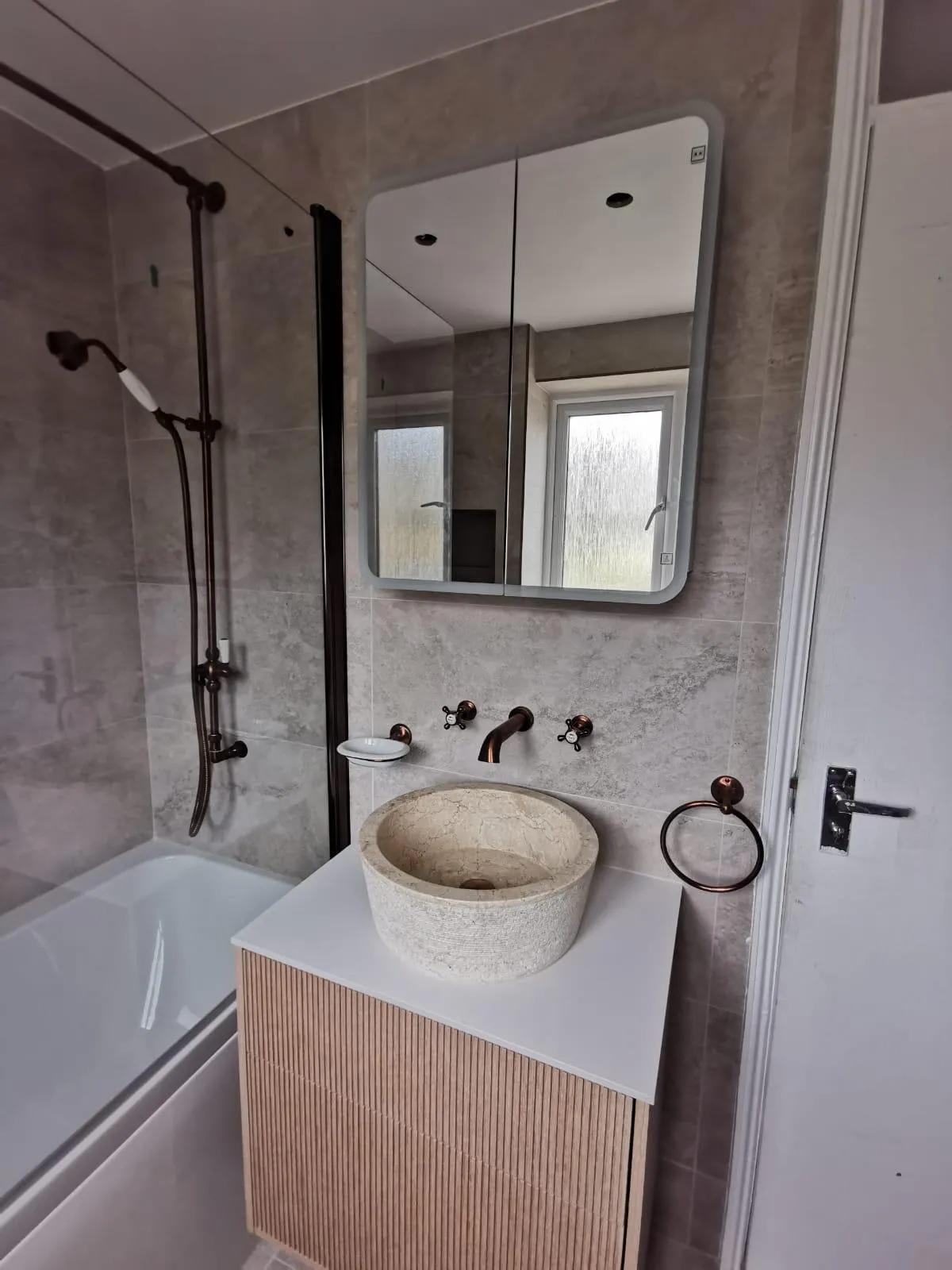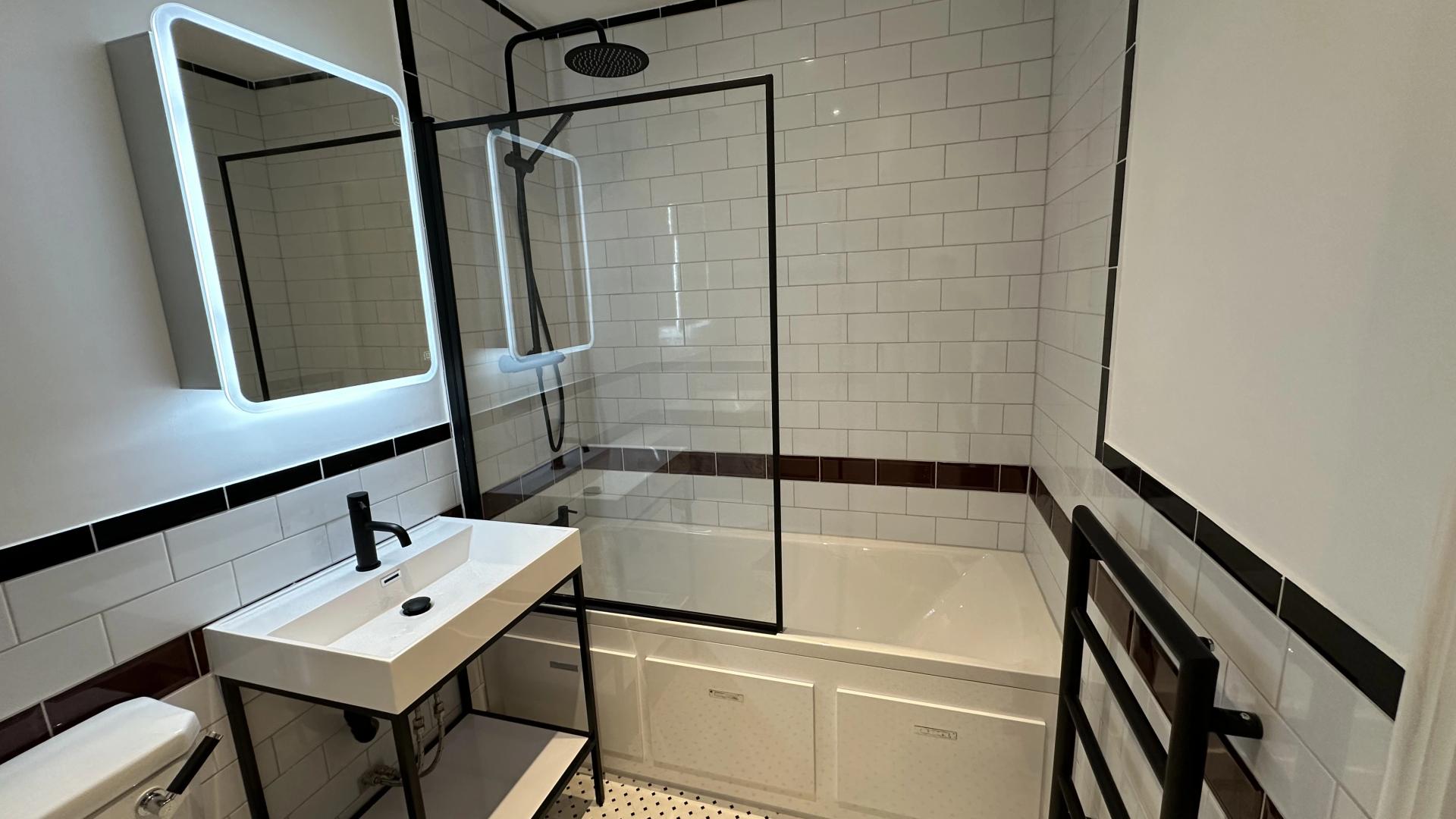
Bathroom lighting must be safe as well as stylish. Here is how zones and IP ratings work, so you choose compliant fittings.
Bathrooms mix water and electricity, so lighting is governed by safety rules. Understanding zones and IP ratings helps you pick fittings that are both safe and legal.
The Zones
- Zone 0 — inside the bath or shower tray. Needs IPX7, low voltage
- Zone 1 — above the bath/shower to 2.25m. Needs at least IPX4 (IPX5 if jets are used)
- Zone 2 — 0.6m beyond zone 1 and around the basin. Needs at least IPX4
- Outside zones — the rest of the room; standard fittings usually fine, but IP-rated is wise near moisture
What IP Ratings Mean
The first digit is dust protection, the second is water protection. For bathrooms, focus on the water digit — IPX4 resists splashing, IPX7 resists immersion.
Practical Layout
Layer your lighting: recessed downlights for general light, an IP-rated light or LED strip at the mirror for tasks, and a feature light or niche LED for atmosphere.
Part P
Bathroom electrics are notifiable work — our electricians are Part P certified, so your lighting is installed and certified correctly.
Planning a bathroom project across East, North or South East London? Get a free, fixed-price quote from STEP-AHEAD Renovations — rated 9.34/10 on Checkatrade.
Frequently Asked Questions
What IP rating do I need above a shower?
Zone 1 (above the shower/bath) needs a minimum of IPX4. If the fitting could be hit by water jets, IPX5 is required.
Can I fit my own bathroom lights?
Bathroom electrical work is notifiable under Part P and should be done by a qualified electrician who can certify it — important for safety and when you sell.