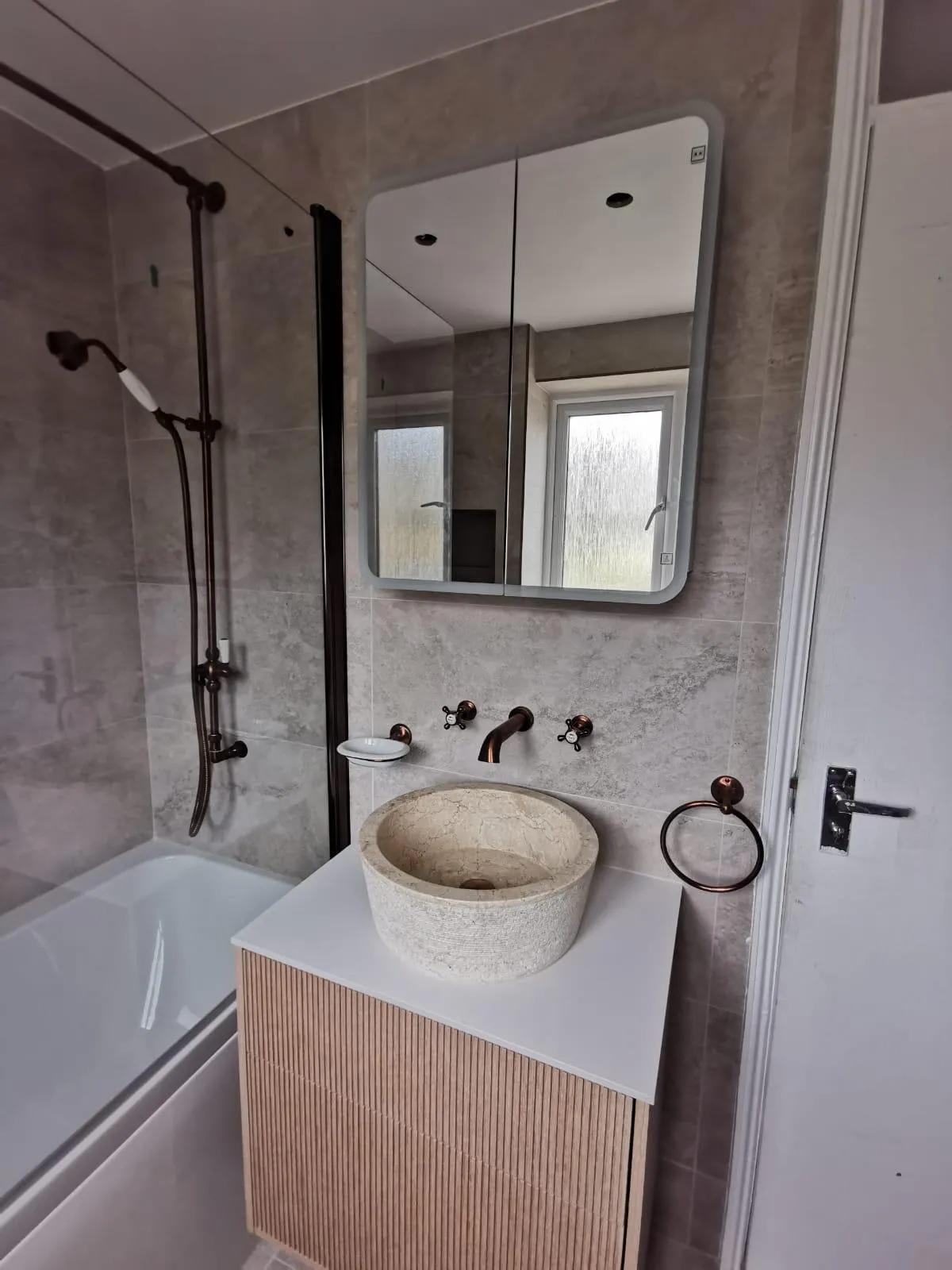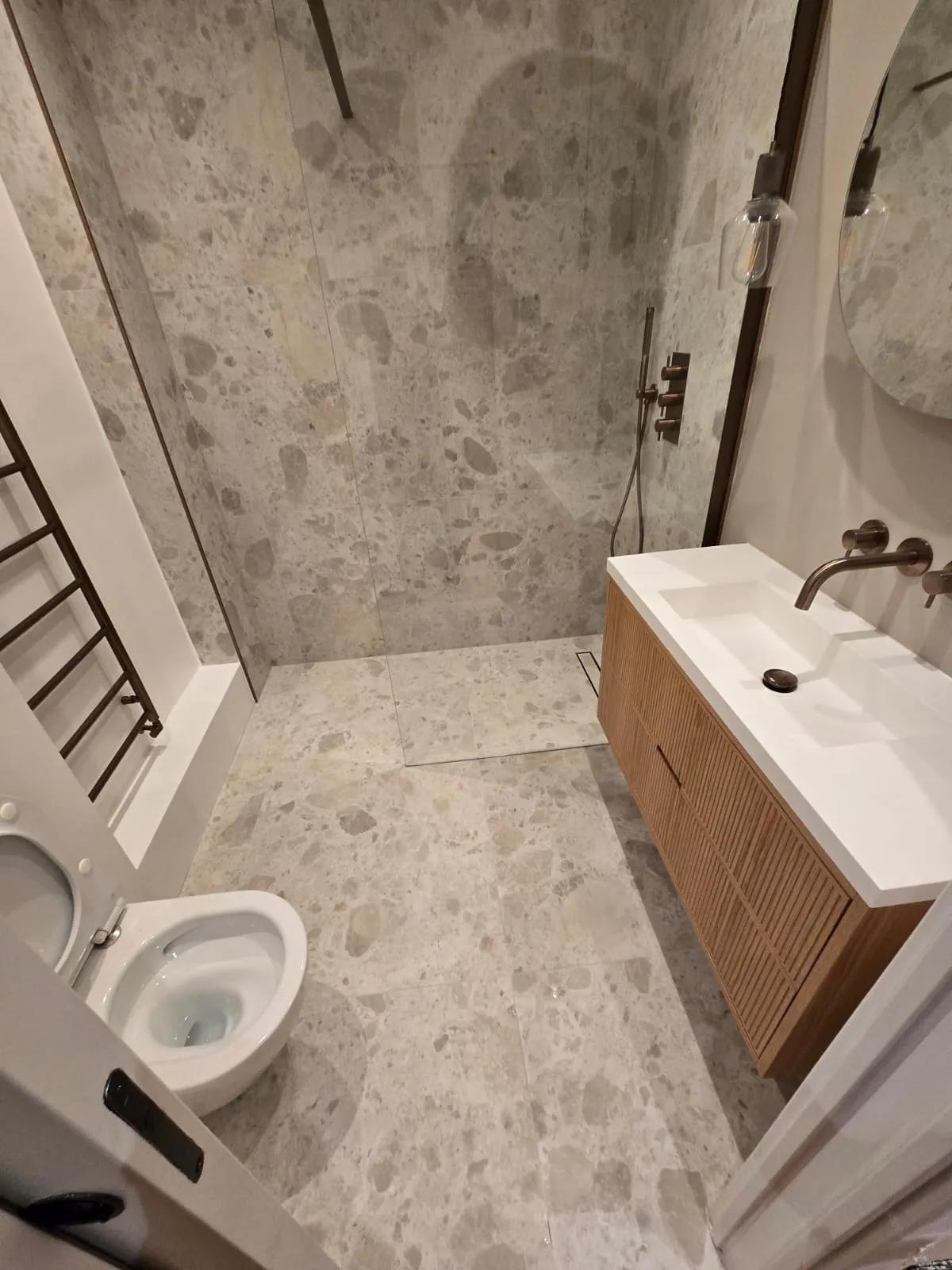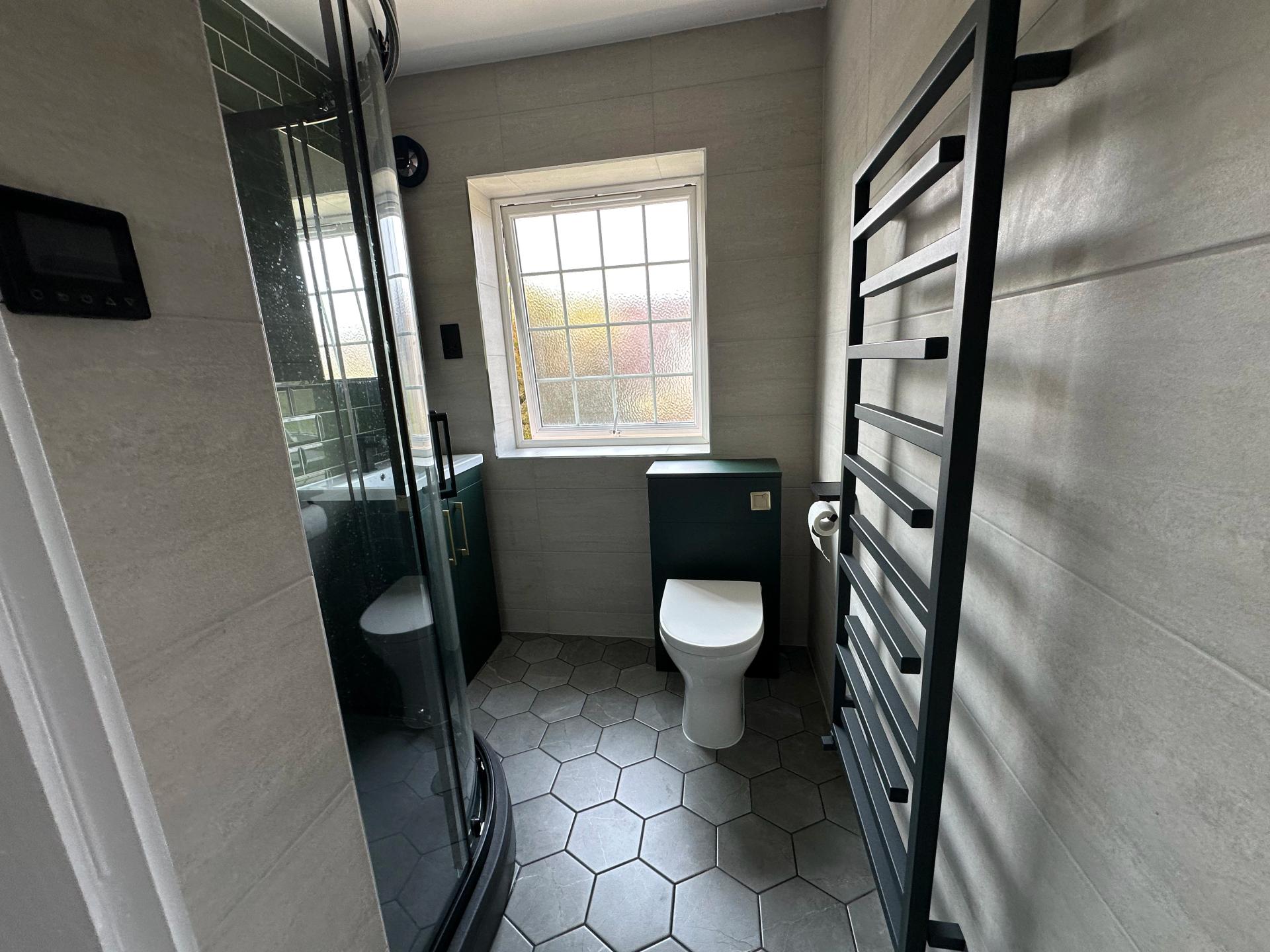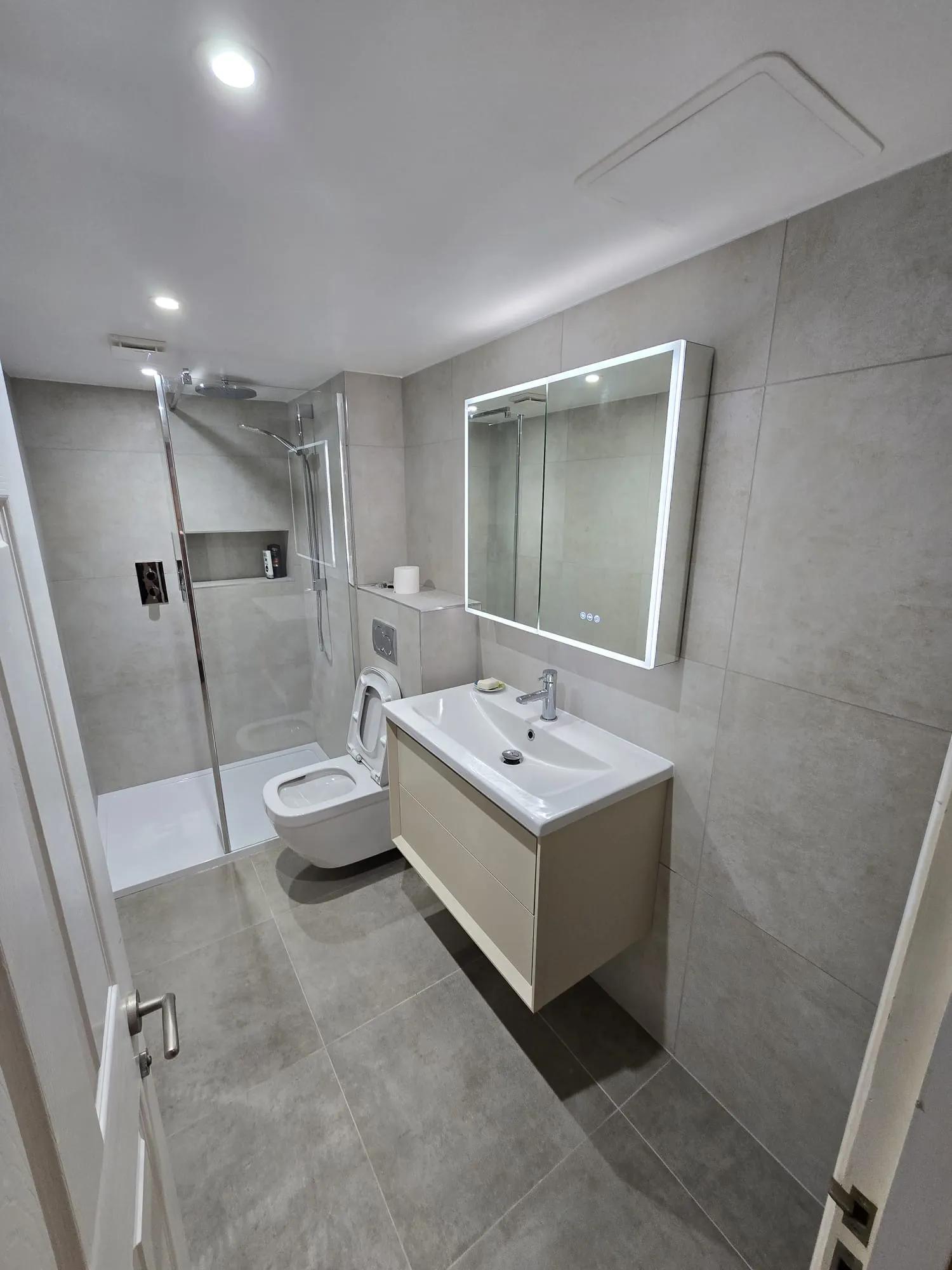
Tanking is what stops a wet room or shower leaking. Here is how proper waterproofing is done — and why it must never be skipped.
Tanking is the invisible work that determines whether a wet room or shower lasts decades or leaks within a year. It is the step we never compromise on.
What Is Tanking?
Tanking means applying a continuous waterproof membrane to the floor and walls in wet areas before tiling. Tiles and grout are not waterproof — the membrane behind them is.
Systems We Use
- Liquid membranes — painted on in coats, ideal for complex shapes
- Sheet membranes — bonded boards/matting for fast, reliable coverage
The Critical Details
Most leaks happen at junctions, not flat areas. Internal corners, the floor-to-wall joint, pipe penetrations and the drain all need reinforcing tape or collars bedded into the membrane.
Coverage
In a full wet room the entire floor and lower walls are tanked; in a standard shower, the shower walls and tray area are tanked. We extend coverage generously to be safe.
Why It Matters
Re-doing a leaking wet room means ripping out tiles — far costlier than tanking properly first time. This is where cutting corners costs the most.
Planning a bathroom project across East, North or South East London? Get a free, fixed-price quote from STEP-AHEAD Renovations — rated 9.34/10 on Checkatrade.
Frequently Asked Questions
Is grout waterproof?
No. Grout and tiles are water-resistant at best. The tanking membrane behind them is what keeps water out of the structure.
Can you tank over plasterboard?
It is far better to use tile backer board in wet areas. We replace standard plasterboard in showers with waterproof backer board before tanking.