Tiling Patterns Explained: Herringbone, Brick Bond and More
The pattern you lay tiles in changes the whole feel of a bathroom. Here are the most popular tile layouts and where each works best.
Tile choice gets the attention, but the layout pattern has just as much impact. Here are the patterns we use most and what they do for a room.
Brick Bond (Offset)
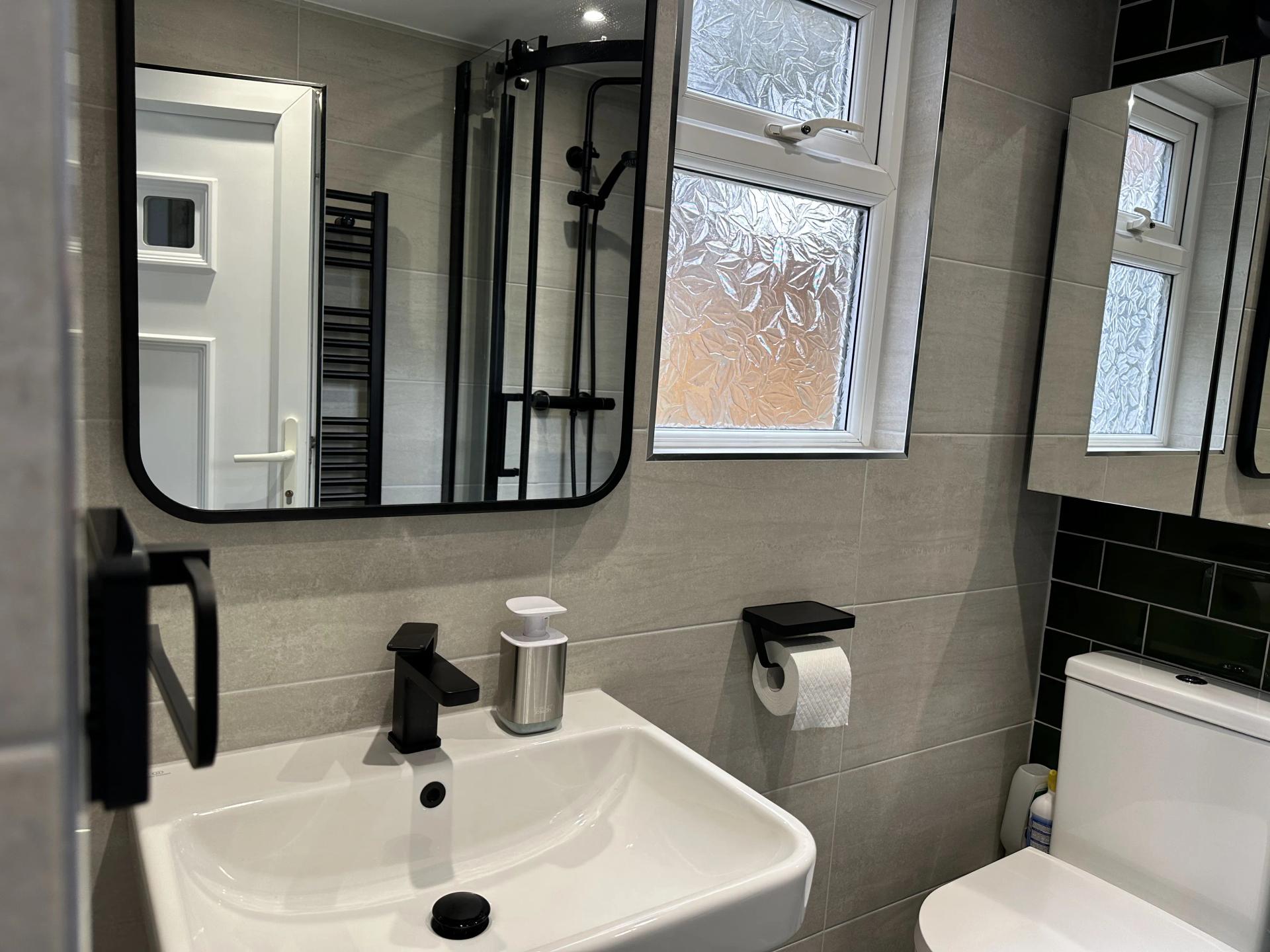
Tiles offset by half (or a third) like brickwork. Timeless, forgiving of slightly uneven walls, and perfect for classic metro tiles.
Stack Bond
Tiles aligned in a perfect grid. Clean and contemporary, but it demands flat walls and precise setting out — gaps show.
Herringbone
Rectangular tiles at 45° or 90° for a dynamic, high-end look. Great as a feature wall or floor; uses more tiles and labour due to cutting.
Vertical
Stacking tiles vertically draws the eye up and makes low ceilings feel taller — useful in compact London bathrooms.
Large-Format
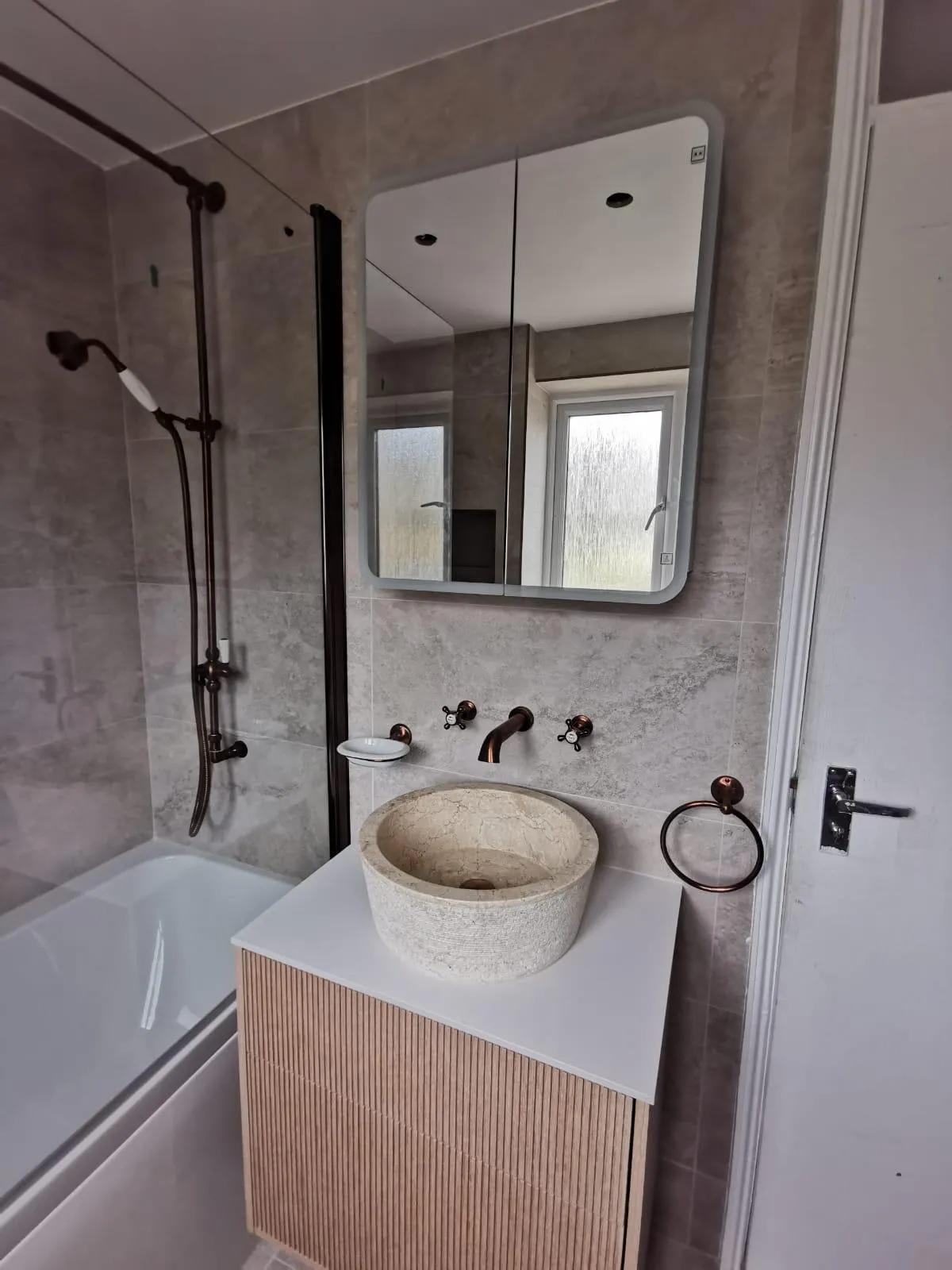
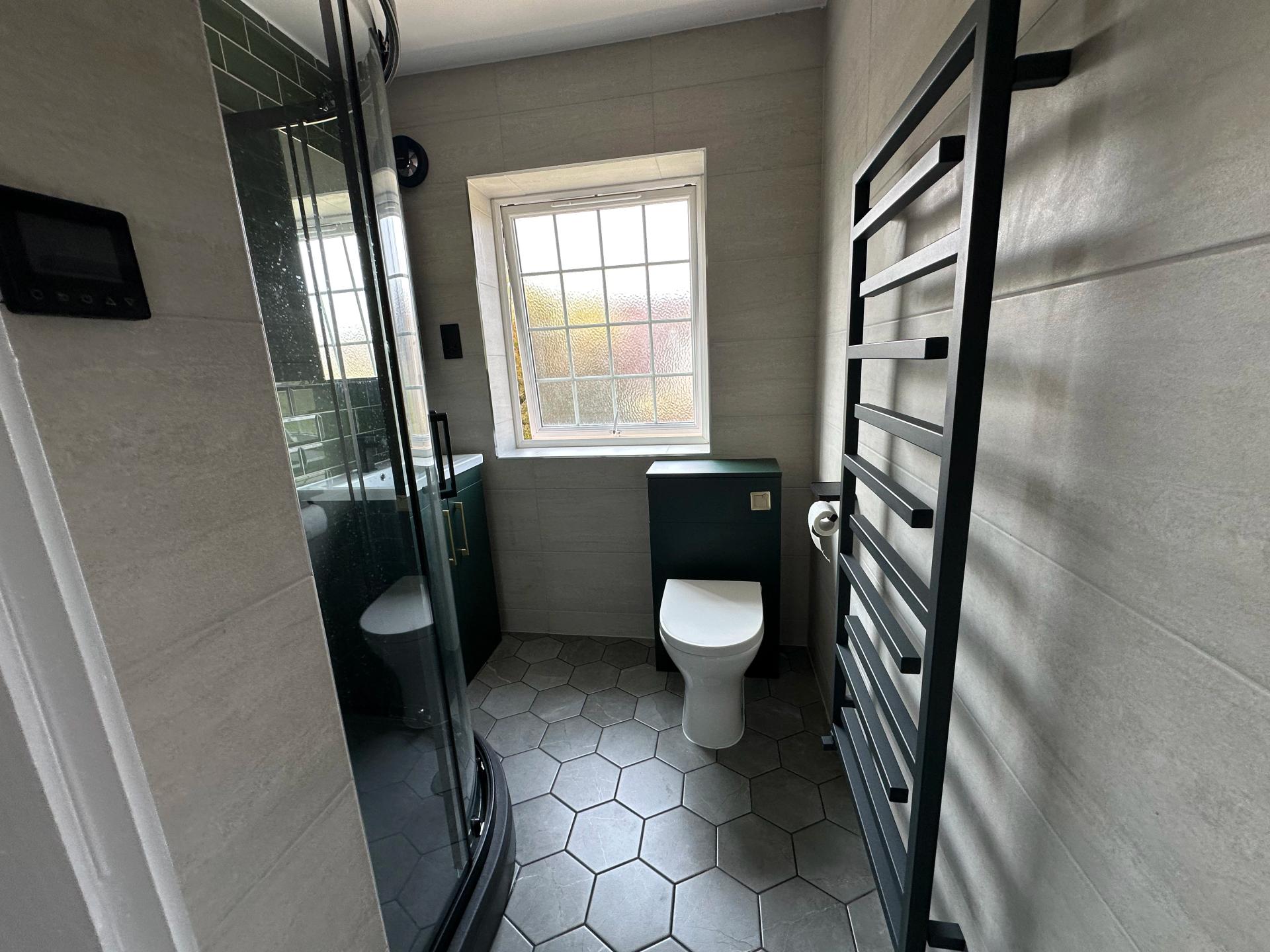
Big tiles with minimal grout lines make small bathrooms feel larger and are easier to keep clean.
Our Advice
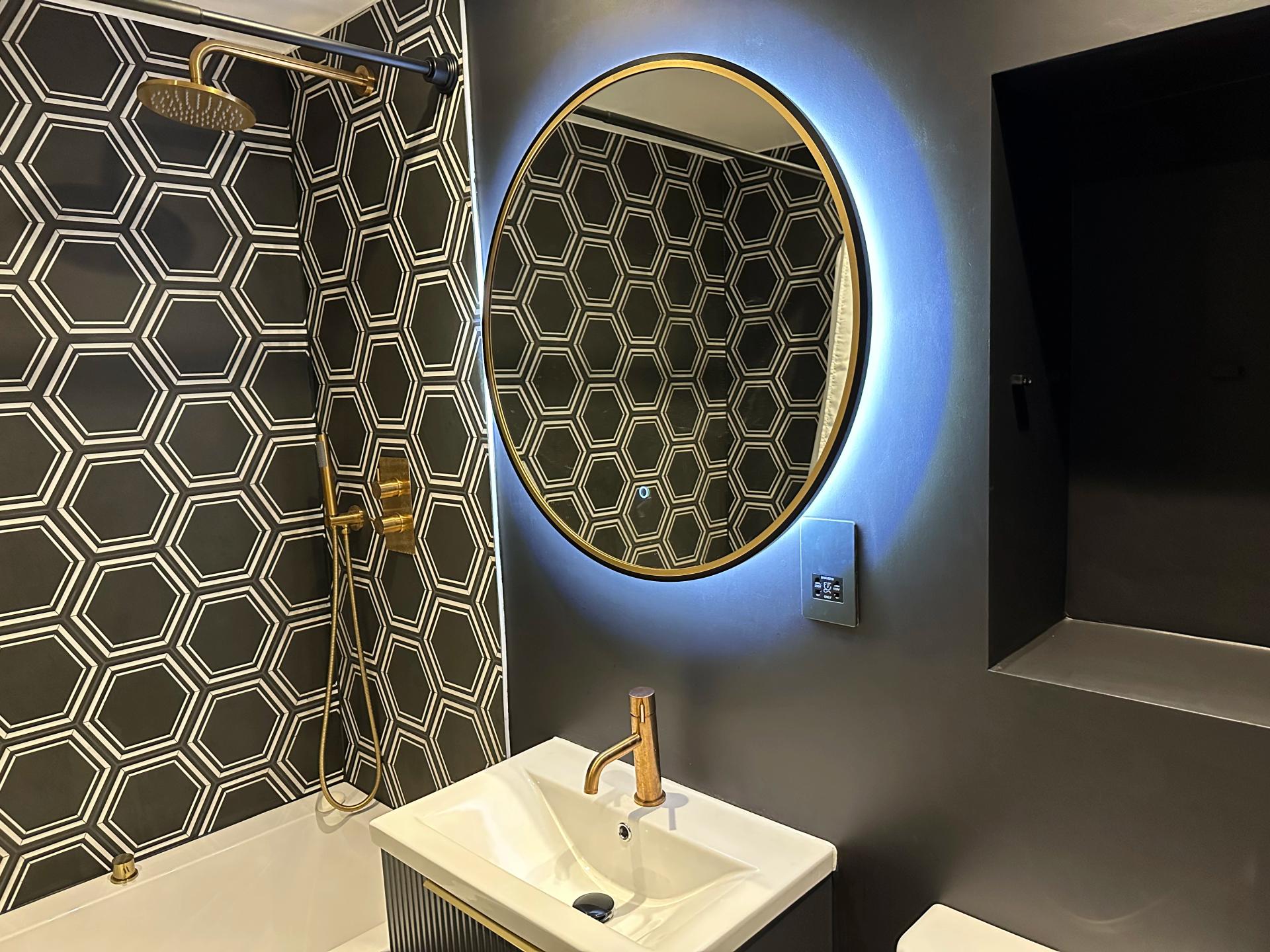
Use a statement pattern (herringbone) on one feature area and a simpler layout elsewhere to balance impact and budget.
Planning a bathroom project across East, North or South East London? Get a free, fixed-price quote from STEP-AHEAD Renovations — rated 9.34/10 on Checkatrade.
Frequently Asked Questions
Does herringbone tiling cost more?
Yes, a little — there is more cutting and setting out, so labour and wastage are higher. The visual payoff is significant, so it is popular for feature areas.
What pattern is best for a small bathroom?
Vertical layouts or large-format tiles help small bathrooms feel bigger. Brick bond is a safe, attractive all-rounder.