Loft Bathroom Conversion: Challenges, Solutions, and Costs
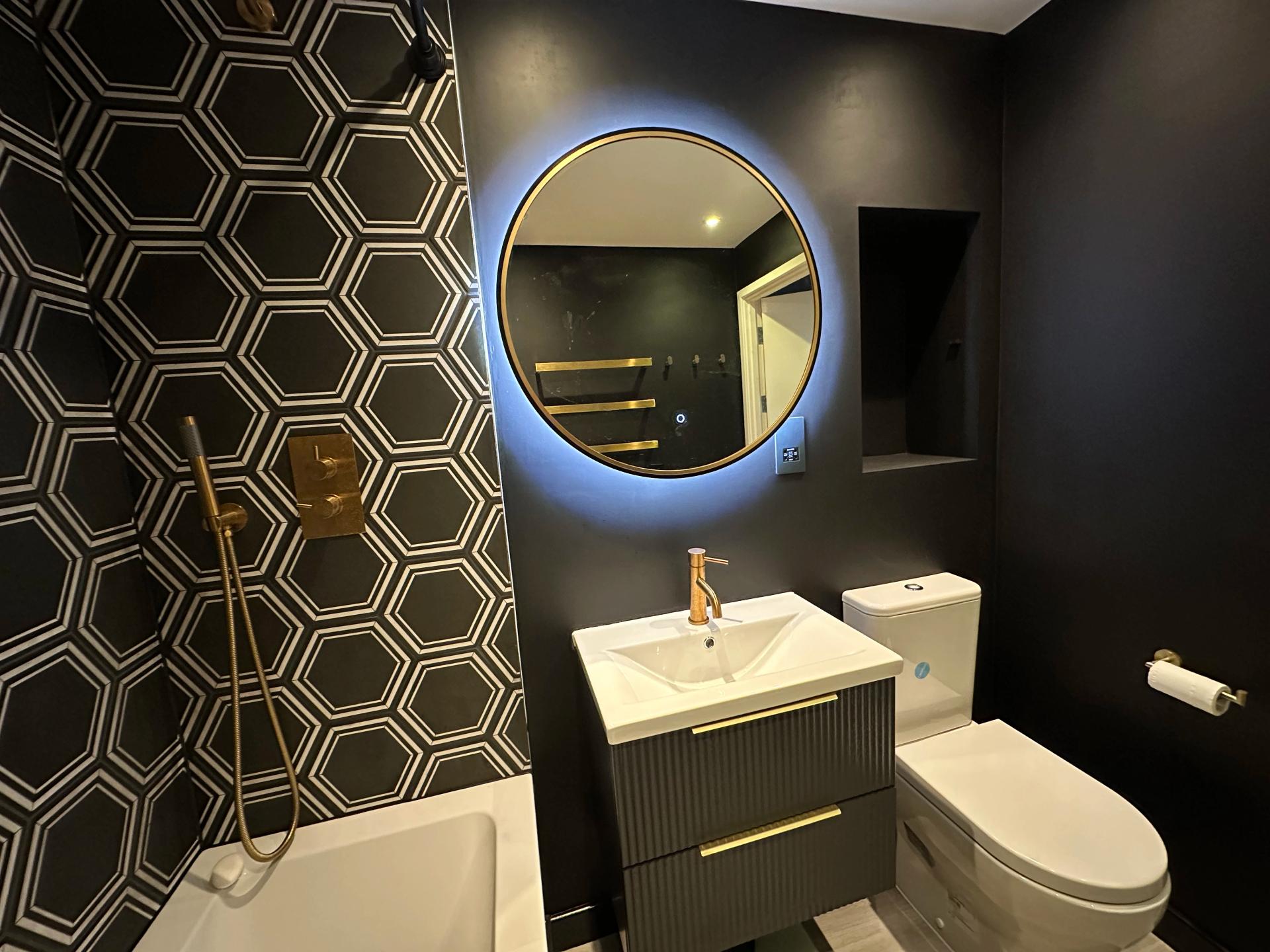
A loft bathroom adds a complete new floor of living to your home. Here are the unique challenges and how to solve them.
A loft conversion is one of London's most popular home improvements, and a well-designed en-suite bathroom makes it a true master suite. However, loft bathrooms present unique challenges that require experienced planning and installation.
Key Challenges
Low and Sloped Ceilings
The most obvious challenge. Loft spaces have sloped ceilings that reduce usable height, particularly at the eaves. Careful fixture placement is essential:
- Toilet: Position where there's at least 2m headroom (centre of the room, away from eaves)
- Shower: Place the shower head at the highest point. A walk-in shower or wet room layout avoids the need for a tall enclosure
- Bath: Can be positioned under the eaves where headroom is lowest — you're lying down, so height doesn't matter
- Basin: Needs adequate height for standing — position away from the lowest point
Drainage
Getting waste water from the loft to the existing soil stack (typically at ground or first floor level) is the biggest technical challenge. Options include:
- Gravity drainage: Running waste pipes internally through the house to connect to the existing soil stack. Requires adequate fall (1:40 minimum) and routing through walls, floors, or cupboards
- New external soil stack: A dedicated soil pipe running down the outside of the house. Needs planning consideration but is sometimes the cleanest solution
- Macerator system: A Saniflo or similar pump that macerates waste and pumps it through small-bore pipes. Useful when gravity drainage is impractical but noisier than standard systems
Water Supply and Pressure
Getting hot and cold water to the loft is straightforward with copper or plastic pipe runs. Water pressure depends on your system:
- Gravity-fed systems often have the cold water tank in the loft already — but hot water pressure may be very low at loft level (minimal head height)
- Combi boilers provide mains-pressure hot water at loft level — adequate for standard showers
- Unvented cylinders provide the best loft shower performance — mains pressure at any height
Weight
Loft floors need to be designed to support bathroom fixtures, tile, and water weight. Your loft conversion structural engineer should specify floor joists that accommodate the bathroom loading — typically steel or engineered timber joists at closer centres than standard loft floors.
Design Tips
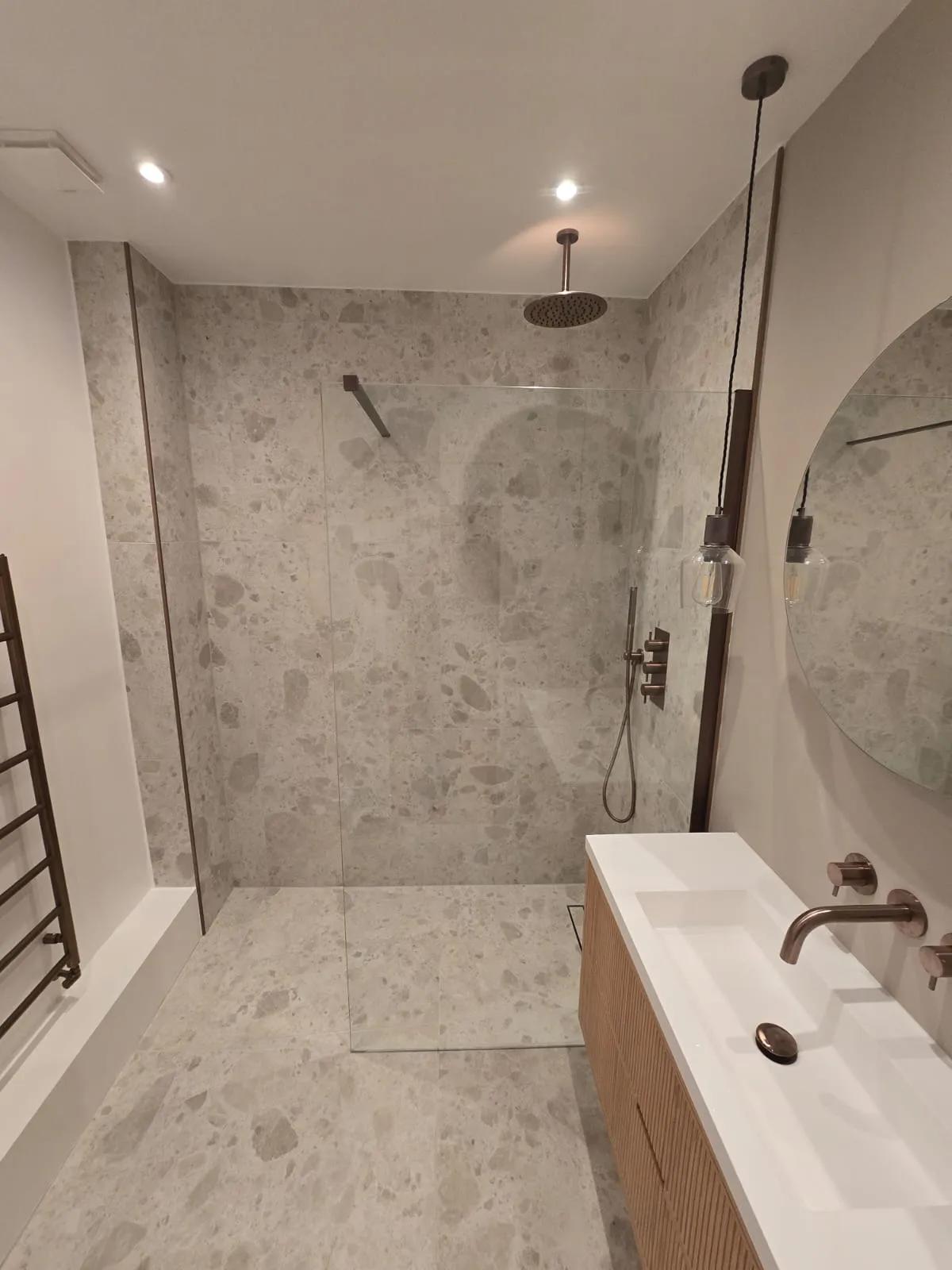
- Use the sloped ceiling as a design feature — a skylight above the bath is spectacular
- A wet room layout maximises usable space under sloped ceilings
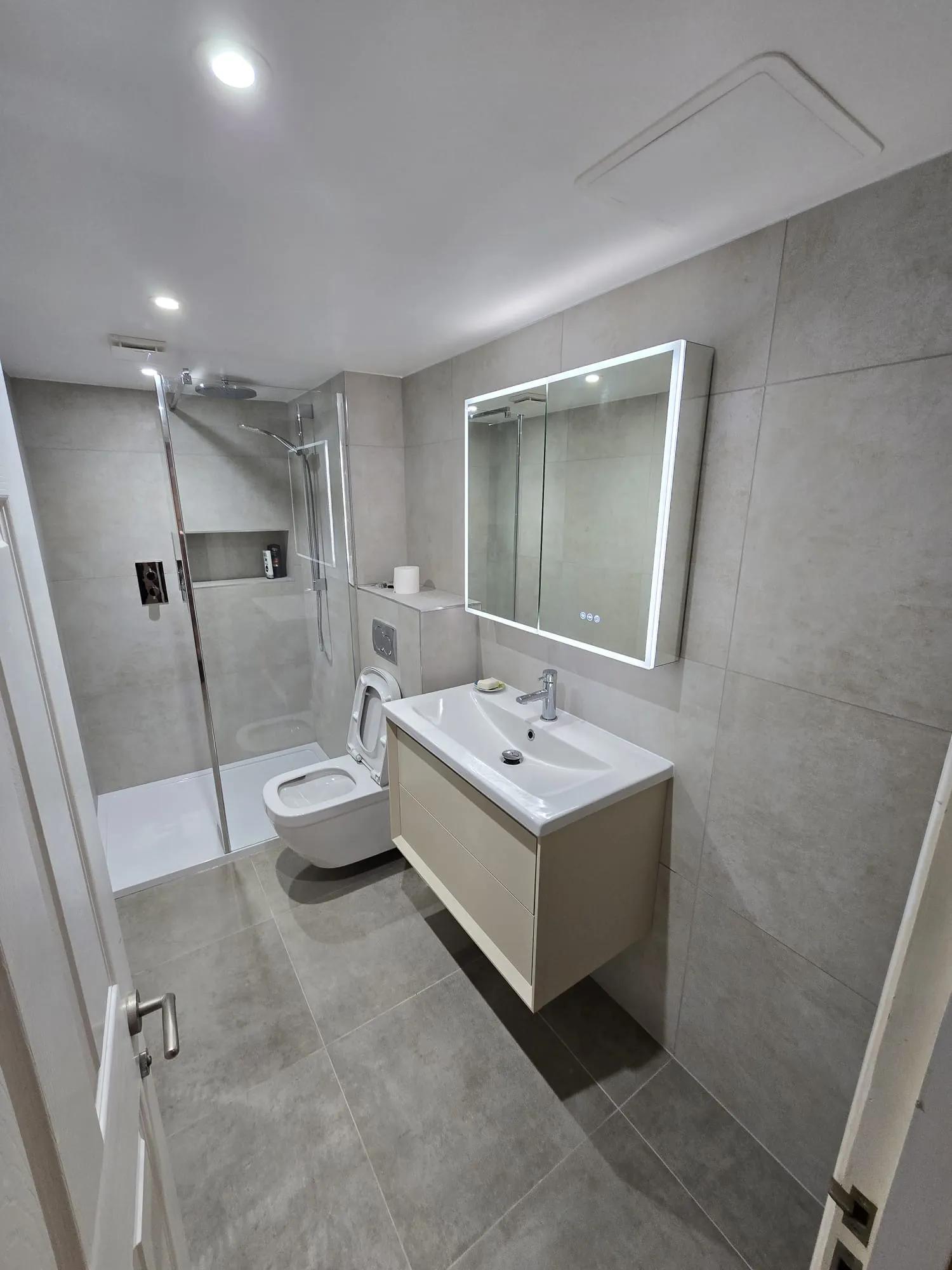
- Wall-hung fixtures keep the floor clear and make cleaning easier
- Light colours and a large mirror make the most of natural light from roof windows
- Consider a skylight over the shower for natural light and ventilation
Costs
A loft en-suite bathroom typically costs £6,000-14,000 as part of a loft conversion project. This includes plumbing, electrical, waterproofing, tiling, and fixtures. The drainage routing is often the most significant variable in cost.
We work with loft conversion specialists across London. Get in touch to discuss your loft bathroom project.
Frequently Asked Questions
What's the minimum ceiling height for a loft bathroom?
There's no legal minimum for a bathroom ceiling height, but practically you need at least 2m at the toilet and basin positions, and 1.8m+ at the shower head. Sloped areas with less height can house the bath or storage.
Can I have a full-size bath in a loft?
Yes, if the floor is structurally designed for it. Position the bath perpendicular to the joists to spread the load. A lightweight acrylic or composite bath (25-40kg) is preferable to cast iron (100kg+) in lofts.
Will a loft bathroom reduce water pressure for the rest of the house?
Not significantly. The loft bathroom connects to the same supply as the rest of the house. If you're concerned, a loft conversion is a good time to upgrade your water system.
2026 Update
Refreshed for 2026. Costs, timelines and lead times change year to year, so treat figures as a guide and ask for a current fixed-price quote. Get yours here.