Victorian Terrace Bathroom Renovation: A London Homeowner's Guide
Renovating a bathroom in a Victorian terrace presents unique challenges and opportunities. Here's how to navigate them successfully.
London's Victorian terraces (built roughly 1837-1901) present specific challenges and opportunities for bathroom renovation. The original houses typically had no indoor bathroom at all — so every bathroom in a Victorian terrace is an adaptation. Understanding the building's quirks helps deliver a renovation that works with the property rather than against it.
Common Challenges
Old Plumbing
Victorian terraces often have a patchwork of plumbing from different eras — lead pipes (original supply), copper pipes (mid-20th century), and plastic (recent additions). A renovation is the ideal time to replace supply pipes with modern copper or plastic and ensure the drainage system is properly configured.
Floor Structure
Victorian floor joists are typically solid timber — strong but variable. Before installing a heavy cast iron bath or a large amount of tiling, check the joist spacing and condition. Most Victorian joists handle standard bathroom loads, but heavy items (cast iron baths, stone countertops) may need additional support.
Uneven Walls and Floors
Victorian walls are rarely perfectly plumb, and floors are rarely perfectly level. Your tiler and plasterer need experience working with these imperfections. Battening and levelling compound can correct most issues, but budget additional preparation time and materials.
Low Ceilings (in Rear Extensions)
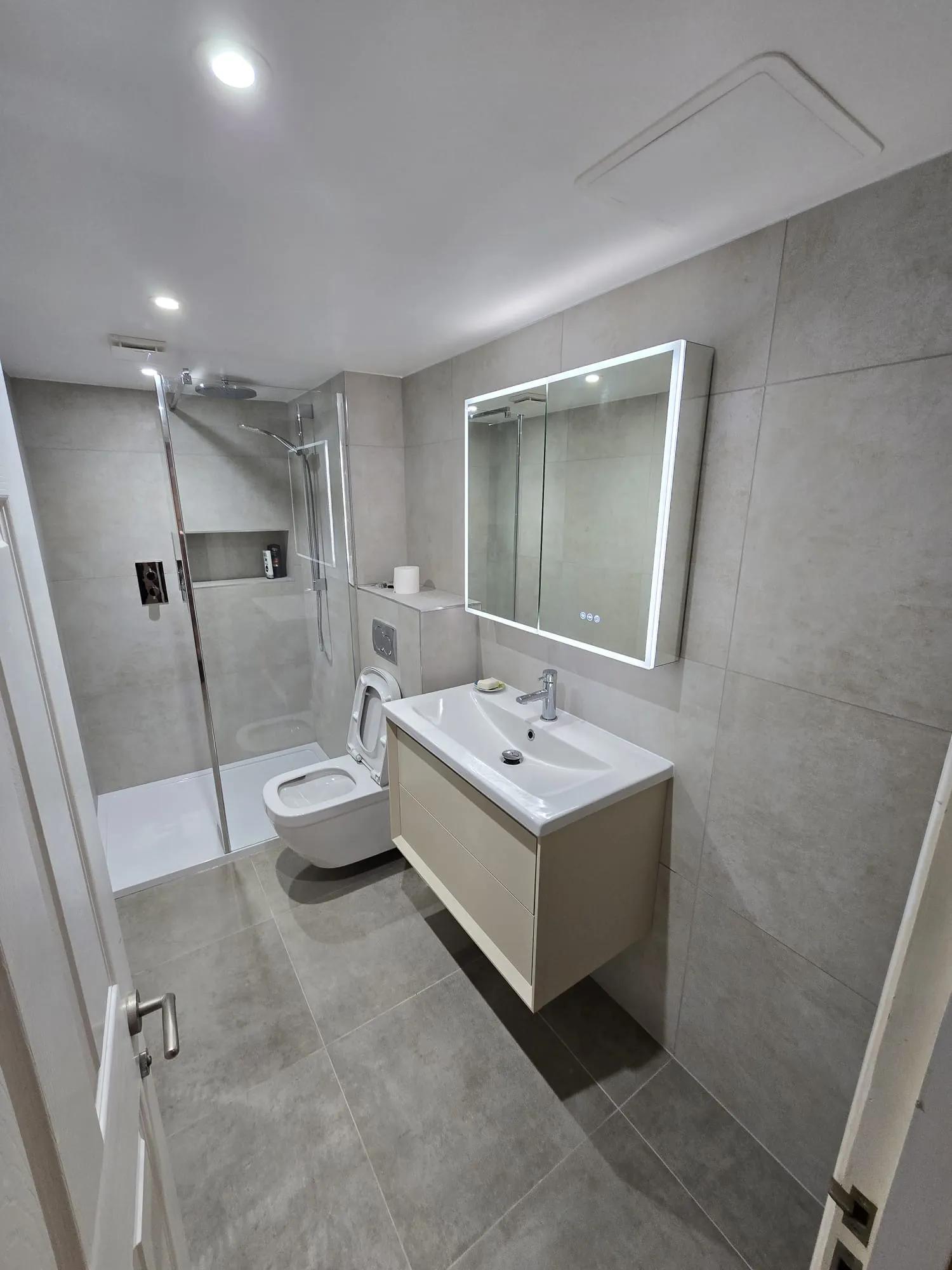
Many Victorian terraces have a rear addition (typically the original scullery) where the bathroom now sits. These extensions often have lower ceilings (2.1-2.3m). Choose horizontal design elements and a wall-hung toilet (which can be set lower than standard) to maximise headroom.
Design Approaches
Period Sympathetic
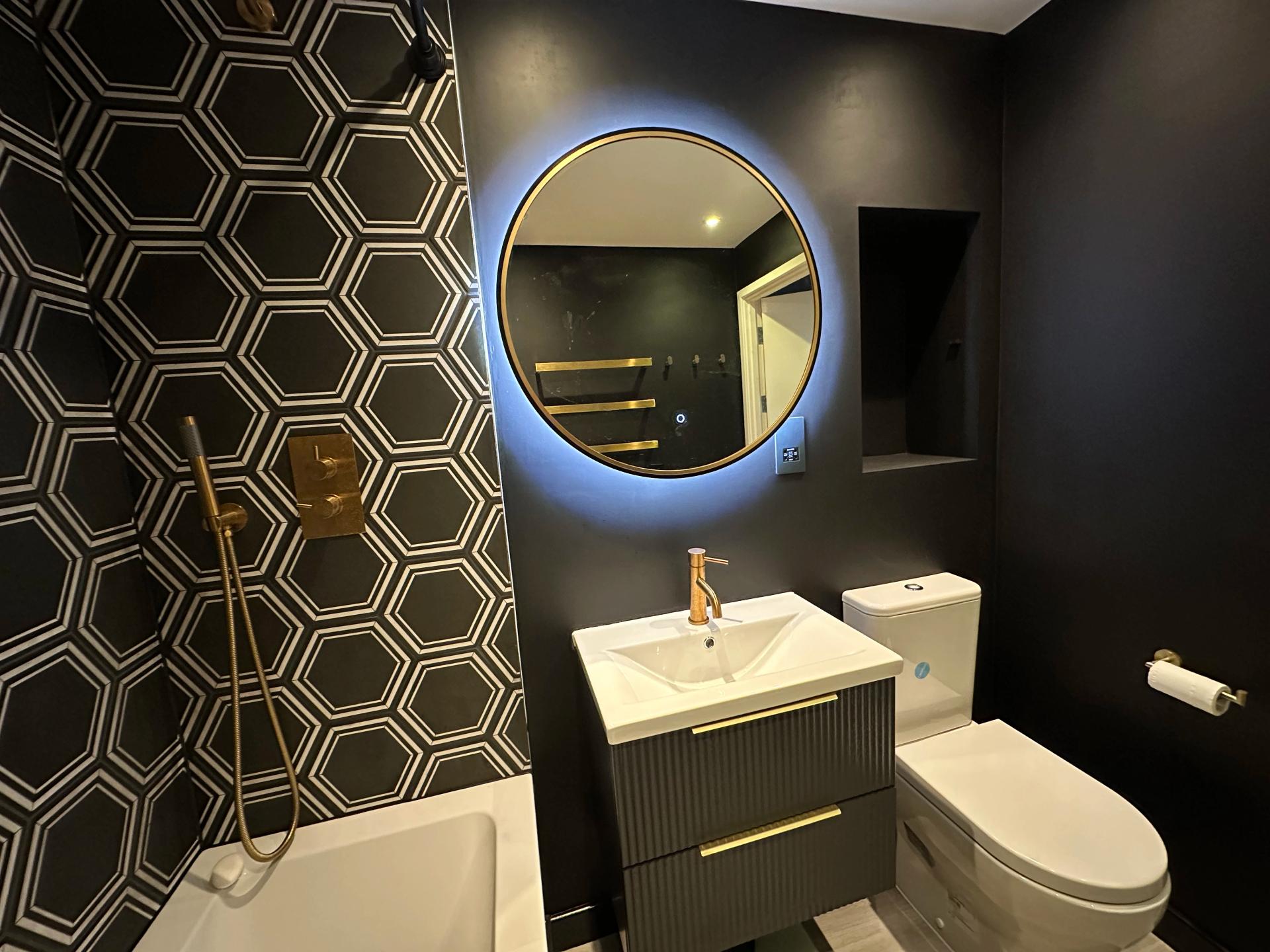
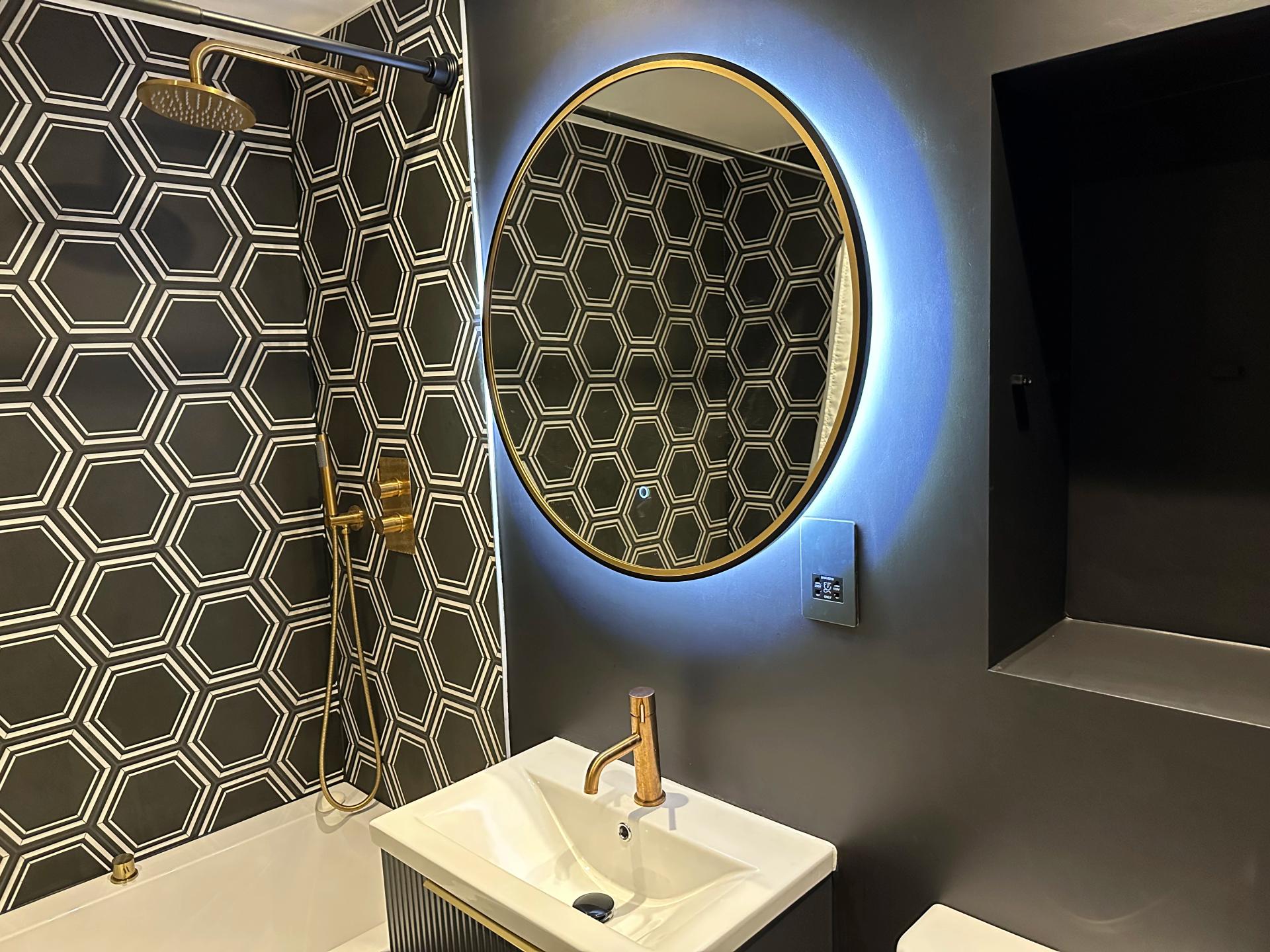
Honour the building's heritage with traditional fixtures: freestanding roll-top bath, Burlington or Imperial ceramics, exposed shower with crosshead valves, encaustic or geometric floor tiles, metro wall tiles. This approach suits buyers who value period character and can increase property value.
Contemporary Contrast
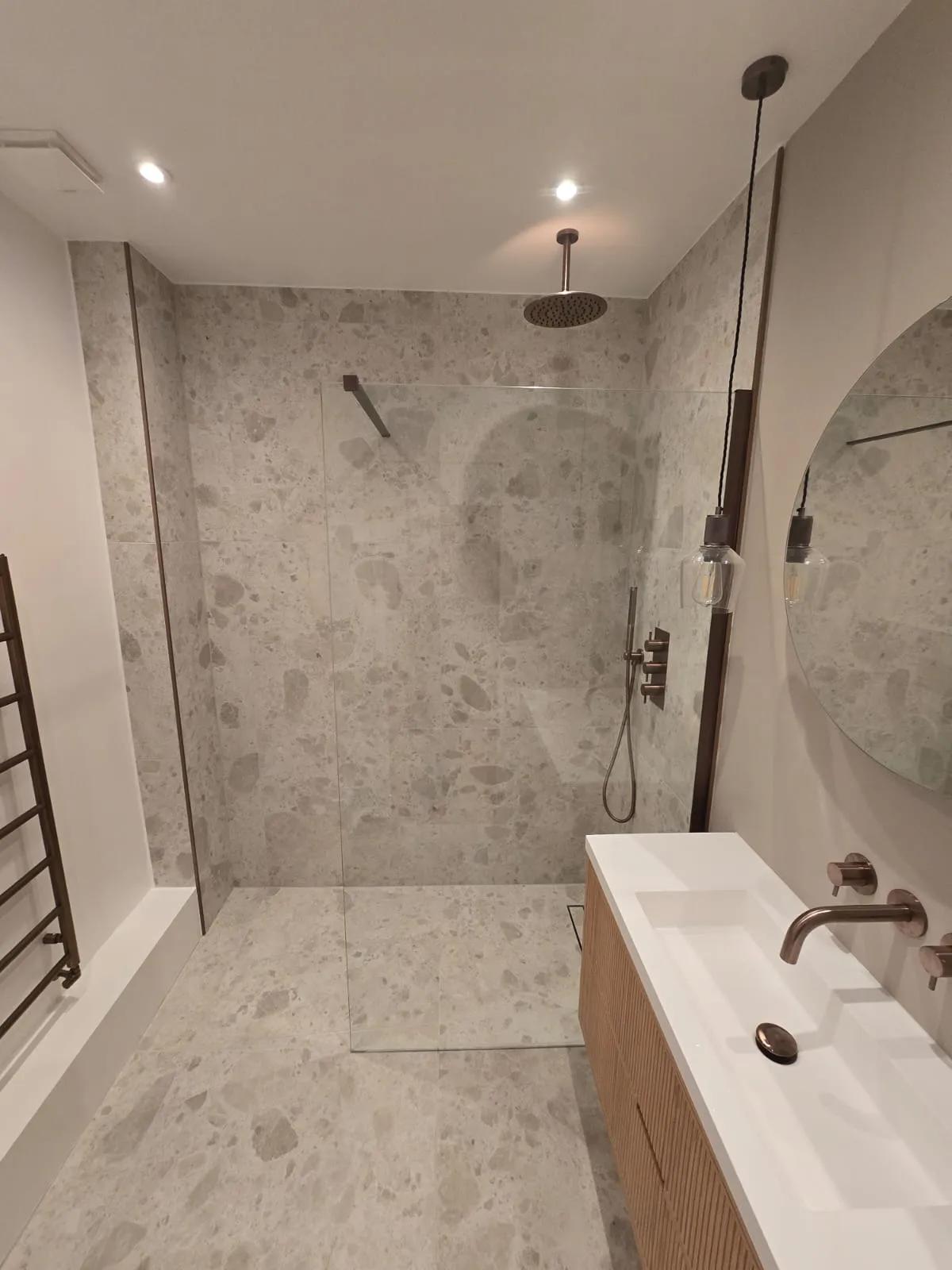
A clean, modern bathroom in a Victorian house creates an appealing contrast — old meets new. Wall-hung toilet, floating vanity, large-format tiles, concealed shower valve. The period features (original sash windows, cornicing) provide the character; the bathroom provides the modernity.
Transitional
A blend of both: contemporary fixtures with period-inspired details. For example, a modern wall-hung vanity with brushed brass taps, or large-format marble-effect tiles with a traditional heated towel rail.
Practical Recommendations
- Upgrade the water system: Many Victorian houses still have gravity-fed systems with tanks in the loft. A renovation is the ideal time to install an unvented cylinder for better shower pressure.
- Check the soil stack: Victorian cast iron soil stacks may be corroded internally. While you have the walls open, inspect and replace if needed — a failed soil stack is expensive to fix after tiling.
- Improve ventilation: Victorian bathrooms often have poor ventilation. Install a humidity-sensing extractor fan vented to the exterior.
- Insulate external walls: If the bathroom is against an external wall, add insulation behind the battening. This prevents condensation and improves comfort.
We specialise in bathroom renovations in London's Victorian terraces. Get in touch to discuss your project.
Frequently Asked Questions
Should I keep the original bathroom fixtures in a Victorian house?
If they're original and in good condition (rare in bathrooms), preserving them can add character and value. More commonly, existing fixtures are not original and have no heritage value — replace them with something that suits your chosen style.
Can Victorian floor joists support a cast iron bath?
Usually yes, but it depends on joist spacing, span, and condition. We recommend a structural assessment for baths over 100kg. Ground-floor and basement bathrooms are typically fine.
Is underfloor heating possible in a Victorian terrace?
Yes. Electric underfloor heating mats are thin enough (3-4mm) to install without significantly raising the floor level. They're ideal for the tile floors common in bathroom renovations.
2026 Update
Refreshed for 2026. Costs, timelines and lead times change year to year, so treat figures as a guide and ask for a current fixed-price quote. Get yours here.