Anti-Slip Bathroom Tiles: Safety Without Compromising Style
Bathroom floors can be dangerously slippery when wet. Here's how to choose anti-slip tiles that look great and keep your family safe.
Bathroom falls are one of the most common household accidents in the UK. Choosing the right floor tiles — particularly in shower areas and wet rooms — significantly reduces the risk without sacrificing style.
Understanding Slip Ratings
Tile slip resistance is measured using standardised tests. The two most common ratings in the UK are:
R Rating (DIN 51130 — Ramp Test)
Measures slip resistance for barefoot wet conditions using an inclined ramp:
- R9: Minimum anti-slip. Suitable for dry areas only
- R10: Good anti-slip. Suitable for bathroom floors outside wet zones
- R11: High anti-slip. Recommended for shower floors and wet rooms
- R12-R13: Very high anti-slip. Commercial/industrial use
Pendulum Test Value (PTV)
Used in UK building regulations. A pendulum swings across the tile surface and measures friction:
- PTV 0-24: High slip risk
- PTV 25-35: Moderate slip risk
- PTV 36+: Low slip risk (recommended for bathrooms)
What to Choose Where
| Area | Recommended Rating |
|---|---|
| Bathroom floor (general) | R10 or PTV 36+ |
| Shower floor | R11 or PTV 36+ |
| Wet room floor | R11 or PTV 36+ |
| Bathroom walls | No rating needed |
Anti-Slip Tile Options That Look Great
Textured Porcelain
Many large-format porcelain tiles are available in both polished (for walls) and structured/textured versions (for floors) in the same design. The textured version has a subtle surface grip that's invisible to the eye but provides R10-R11 anti-slip performance. This is the most popular approach for contemporary bathrooms.
Mosaic Tiles
Small mosaic tiles (20-50mm) naturally provide grip because the numerous grout lines create texture. Glass, porcelain, and stone mosaics all offer good anti-slip properties on shower floors while looking beautiful.
Stone-Effect with Grip
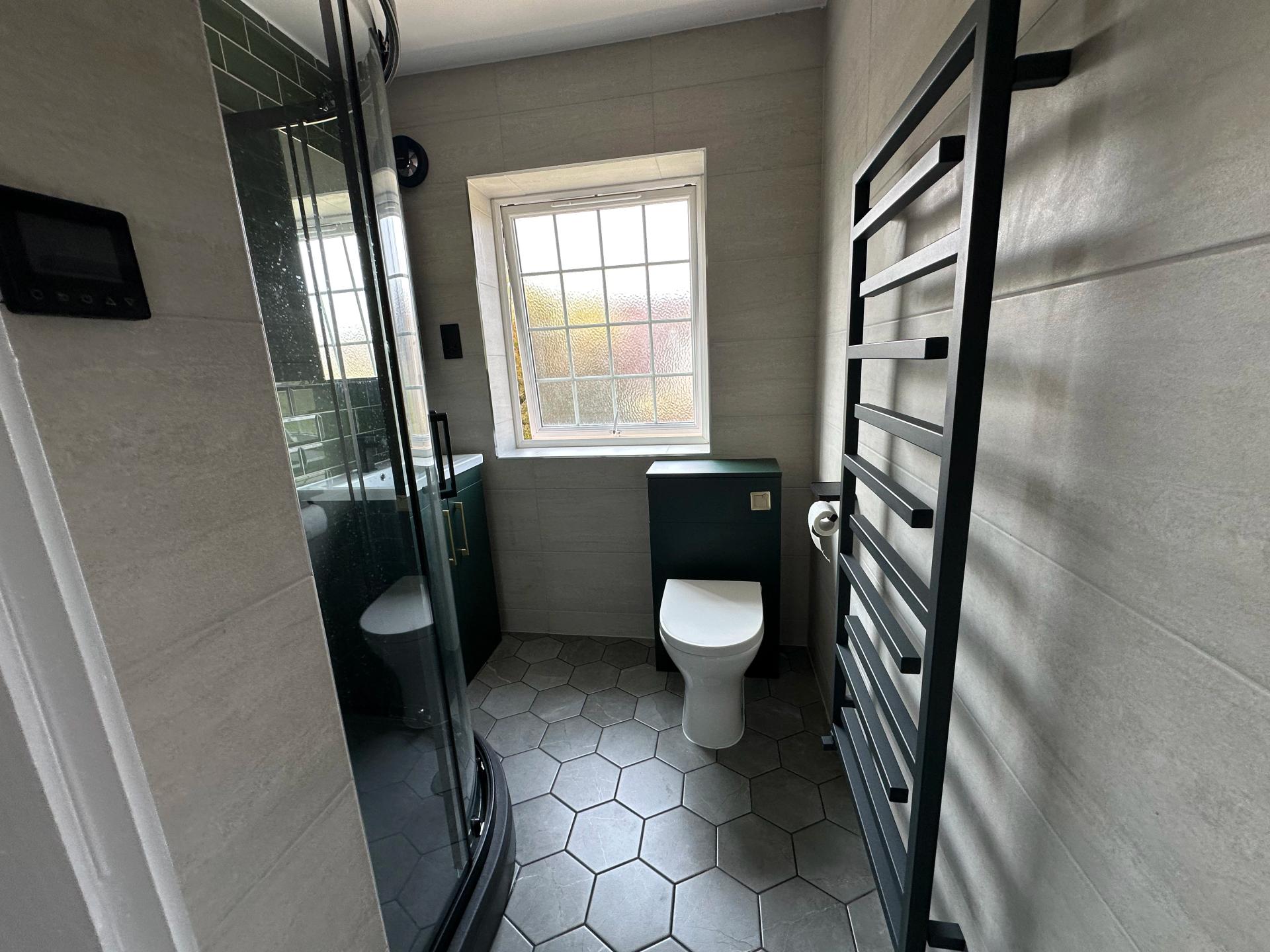
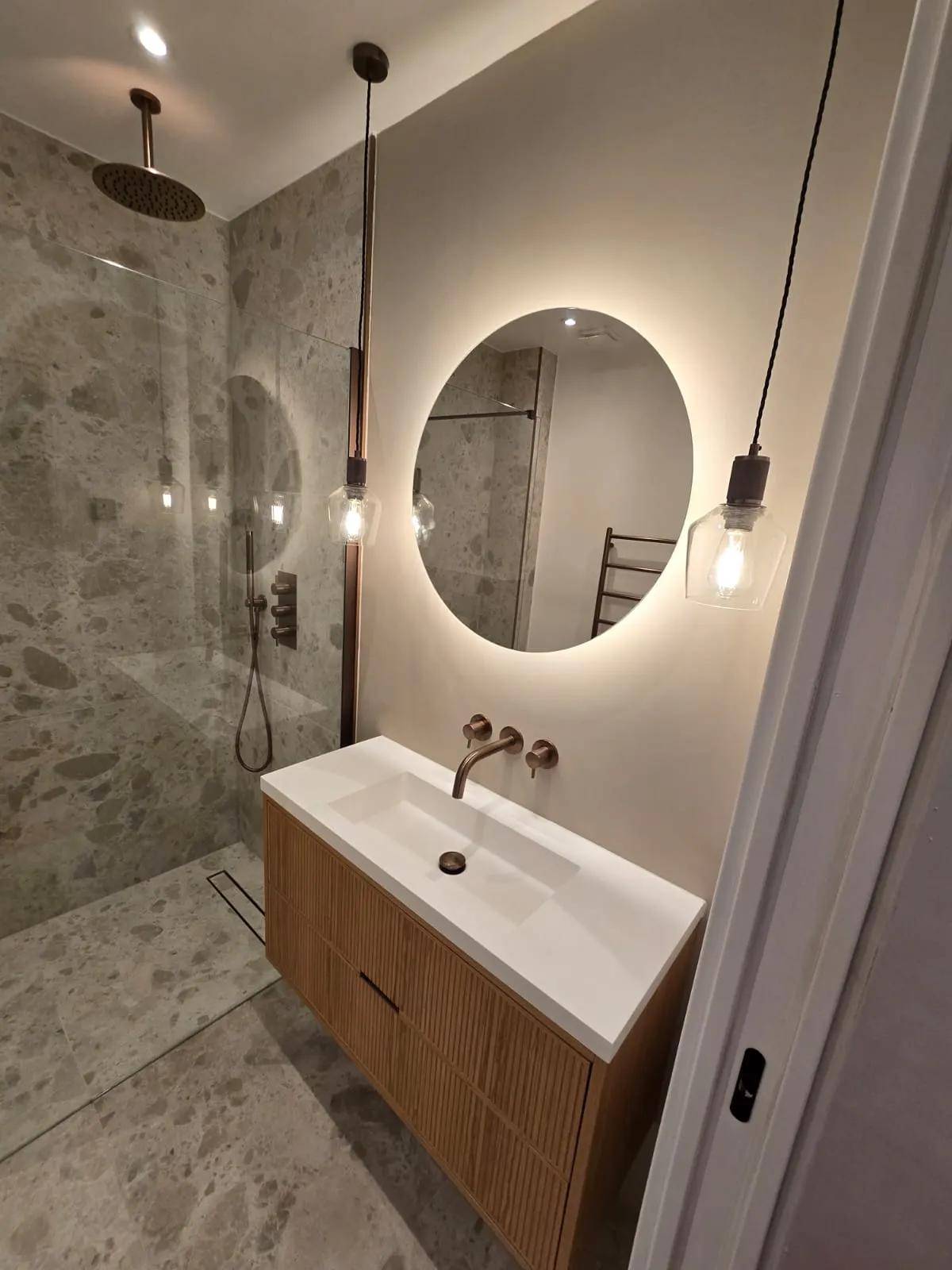
Stone-effect and concrete-effect porcelain tiles often come with structured finishes that provide R10-R11 grip. The natural stone appearance suits many design schemes while providing safety.
Matt Finish vs Polished
As a general rule, matt and honed finishes provide better grip than polished or glossy finishes. For bathroom floors, always choose matt or structured — save the polished tiles for walls.
Invisible Anti-Slip Treatments
If you love a particular tile that doesn't have an anti-slip rating, aftermarket treatments (like SlipDoctors or 3M Safety-Walk) can be applied to increase grip without visibly changing the tile's appearance. These treatments etch microscopic channels into the tile surface.
Our Approach
We always recommend R10 minimum for bathroom floors and R11 for shower areas. We specify anti-slip floor tiles as standard in every renovation — safety shouldn't be an optional extra. Contact us to discuss safe, stylish tiling for your bathroom.
Frequently Asked Questions
Are anti-slip tiles harder to clean?
Slightly — the textured surface can trap dirt compared to smooth tiles. However, modern anti-slip porcelain tiles have fine micro-textures that provide grip without being rough enough to collect significant dirt.
Can I use polished tiles on a bathroom floor?
We advise against it. Polished tiles become dangerously slippery when wet. If you love the look, use polished on walls and the same tile in a matt/structured finish on floors.
Do anti-slip tiles feel rough underfoot?
Good quality anti-slip tiles (R10-R11) have a subtle texture that provides grip without feeling rough. R12+ tiles can feel noticeably rough and are generally unnecessary for residential bathrooms.
2026 Update
Reviewed for 2026 with current material options in mind. Material performance and pricing vary, so confirm specifics before ordering. Ask us which materials suit your bathroom.