Epoxy Grout vs Cement Grout: Which Is Better for Bathrooms?
Grout choice affects how your bathroom looks and performs for years. We compare epoxy and cement grout to help you make the right decision.
Grout might seem like an afterthought, but it has a dramatic impact on how your bathroom looks and performs over time. The choice between cement-based and epoxy grout affects stain resistance, mould growth, colour retention, and long-term maintenance.
Cement Grout
Traditional cement grout (also called cementitious grout) is a mixture of Portland cement, sand, and water. It's been used for decades and is the standard in most tile installations.
- Pros: Affordable, widely available, easy to work with, familiar to all tilers, available in many colours
- Cons: Porous — absorbs water, stains, and promotes mould growth. Colour fades over time. Requires sealing after installation and periodic resealing. Can crack with building movement.
- Cost: £5 – £15/m² (installed)
Epoxy Grout
Epoxy grout uses an epoxy resin instead of cement as its binder. It's a two-part system (resin + hardener) that cures to form a hard, non-porous surface.
- Pros: Completely waterproof, stain-proof, and mould-resistant. Colour doesn't fade — looks the same after 10 years as day one. Doesn't need sealing. Stronger than cement grout — won't crack. Chemical-resistant.
- Cons: More expensive (2-3x the cost of cement grout). Harder to work with — shorter working time and requires more skill to achieve a clean finish. Not all tilers are experienced with it.
- Cost: £15 – £35/m² (installed)
Performance Comparison
| Property | Cement Grout | Epoxy Grout |
|---|---|---|
| Water absorption | High | Zero |
| Mould resistance | Poor (needs sealing) | Excellent |
| Stain resistance | Fair (when sealed) | Excellent |
| Colour retention | Fades over 3-5 years | Permanent |
| Flexibility | Brittle — can crack | Slightly flexible |
| Ease of cleaning | Moderate | Excellent — wipes clean |
Where to Use Epoxy
We recommend epoxy grout for:
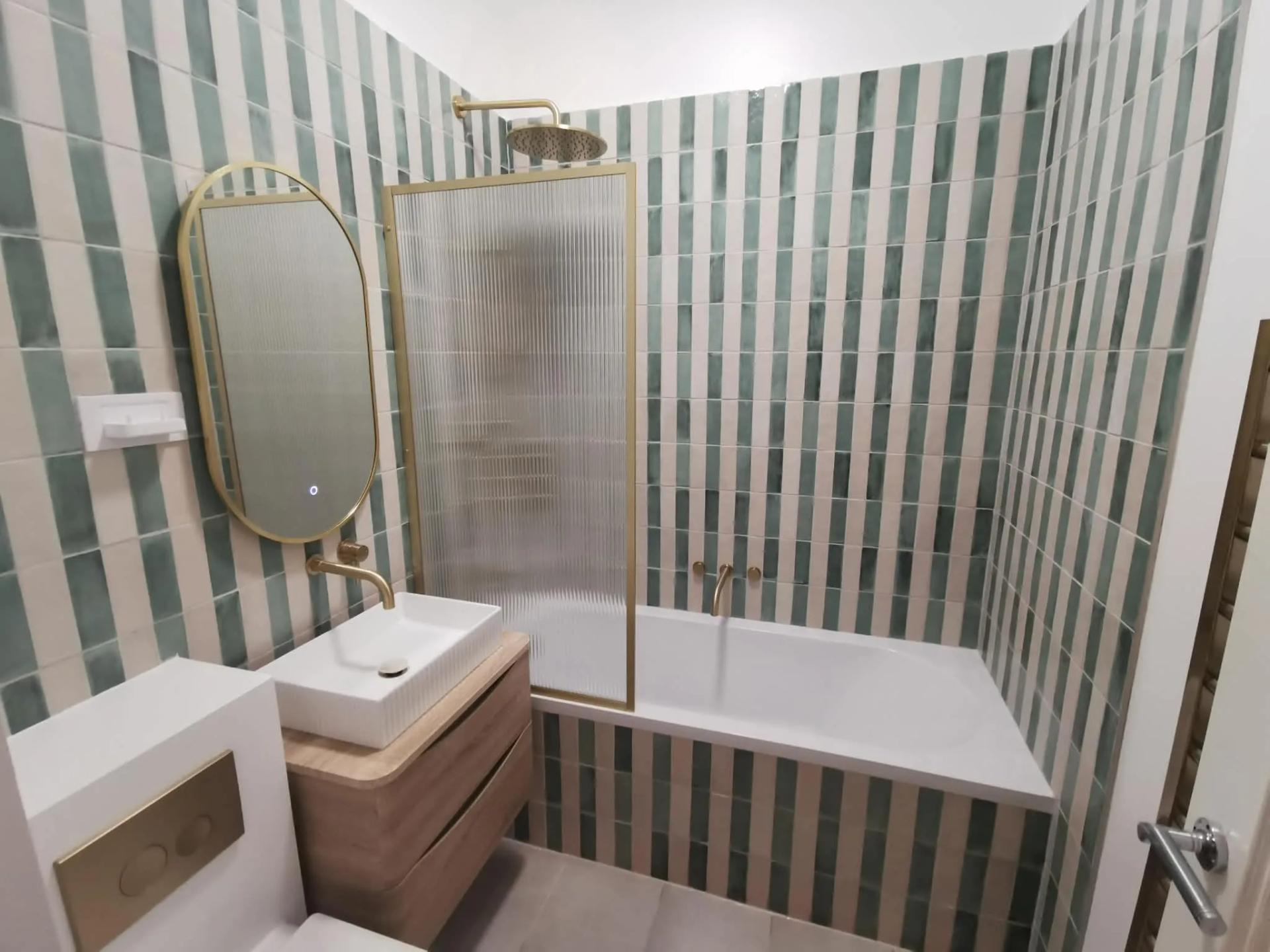
- Shower floors and walls: The area most exposed to water and most prone to mould. Epoxy stays clean and white indefinitely.
- Wet rooms: The entire floor should use epoxy — zero water absorption means zero moisture penetration.
- White and light-coloured grout: If you choose white grout, use epoxy — cement-based white grout will discolour within 2-3 years regardless of sealing.
- Floor tiles in high-traffic areas: Epoxy resists staining from dirt, spills, and cleaning products.
Our Approach
We use epoxy grout in all wet areas (shower zones, wet rooms, bath surrounds) and offer it as an upgrade for the full bathroom. The additional cost is typically £200-400 for a standard bathroom, and it pays for itself in reduced maintenance and sustained appearance over the bathroom's lifetime.
Get in touch to discuss your tiling project — we'll recommend the right grout for each area.
Frequently Asked Questions
Can epoxy grout be used with all tiles?
Yes, with one consideration: natural stone tiles may require testing first, as some stones can be stained by epoxy pigments during application. Your tiler should test a small area first.
Can I replace old cement grout with epoxy?
Yes, but the old grout must be completely removed first (using a grout rake or oscillating tool). It's labour-intensive but worthwhile for a bathroom refresh without retiling.
Why don't all tilers use epoxy?
Epoxy has a shorter working time (30-45 minutes vs hours for cement), requires precise mixing, and needs to be cleaned off tile surfaces quickly. It demands more skill and experience, which is why not all tilers offer it.
2026 Update
Reviewed for 2026 with current material options in mind. Material performance and pricing vary, so confirm specifics before ordering. Ask us which materials suit your bathroom.