Porcelain vs Ceramic Tiles: What's the Real Difference?
Porcelain and ceramic tiles look similar but perform differently. Here's the real difference and which to choose for your bathroom.
Porcelain and ceramic tiles are both made from clay fired in a kiln, but the similarities end there. Porcelain is fired at higher temperatures (1200-1400°C vs 900-1100°C for ceramic) using a denser clay body, resulting in a harder, less porous, and more durable tile. Here's what this means in practice.
Water Absorption
This is the key technical difference. Porcelain tiles have a water absorption rate below 0.5%, making them virtually waterproof. Ceramic tiles absorb 3-10% of water. For bathrooms — especially shower floors, wet rooms, and areas regularly exposed to water — porcelain is the safer choice.
Durability
Porcelain is significantly harder than ceramic (rated 5-7 on the Mohs scale versus 3-5 for ceramic). It resists scratches, chips, and wear better. For floor tiles that will see daily foot traffic, porcelain maintains its appearance for decades. Ceramic is adequate for walls but shows wear faster on floors.
Through-Body Colour
Full-body porcelain tiles have colour throughout the entire tile thickness. If the tile chips (rare), the underlying material is the same colour as the surface. Glazed ceramic tiles have a printed pattern on top — a chip reveals the pale clay body beneath, which is noticeable.
Cost
| Type | Typical Cost per m² |
|---|---|
| Budget ceramic wall tile | £10 – £20 |
| Mid-range ceramic | £20 – £40 |
| Budget porcelain | £20 – £35 |
| Mid-range porcelain | £35 – £60 |
| Premium porcelain (large format) | £50 – £120 |
When to Use Each
Use porcelain for: Bathroom floors, shower walls and floors, wet rooms, anywhere regularly exposed to water, and anywhere durability matters.
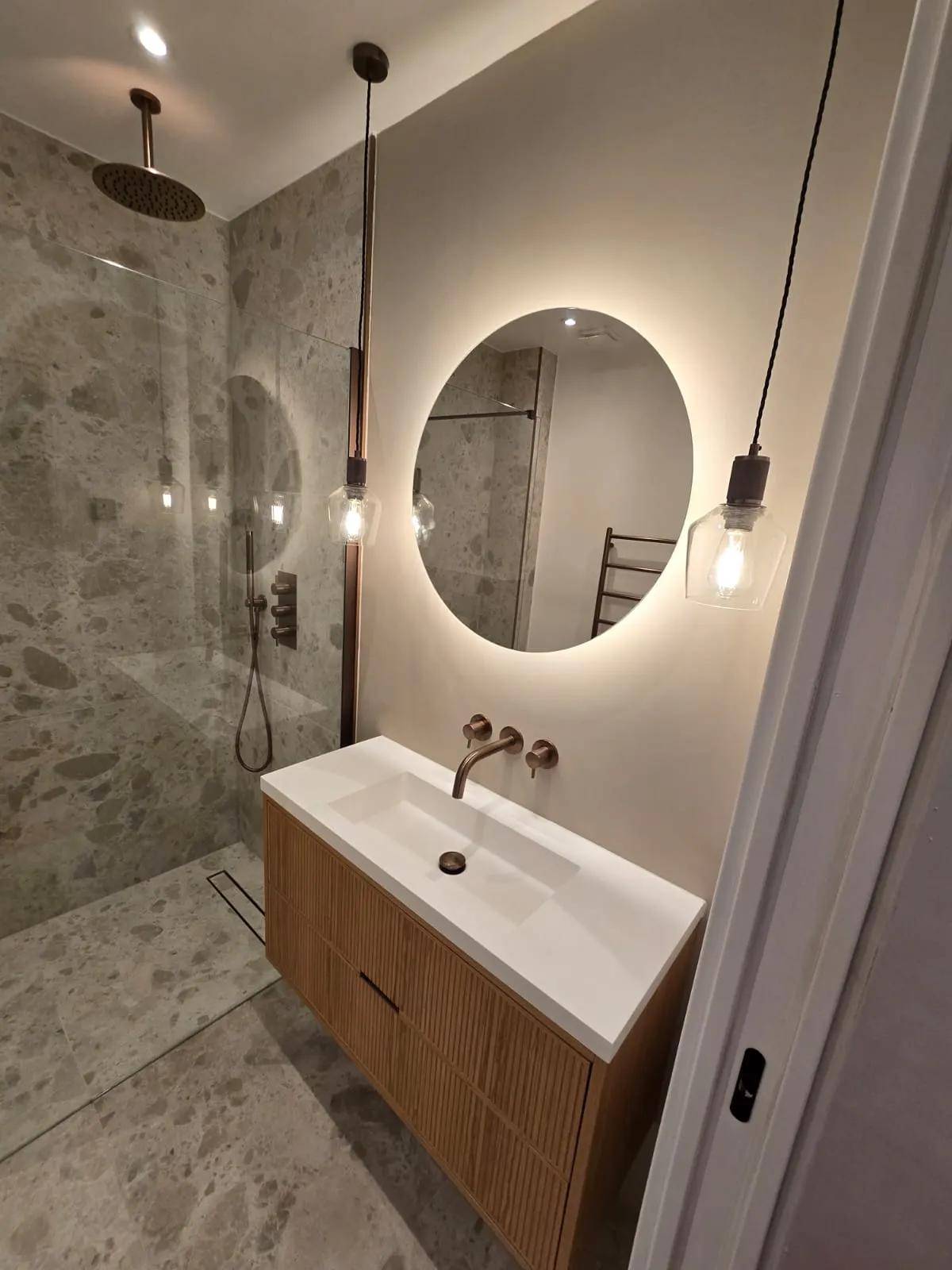
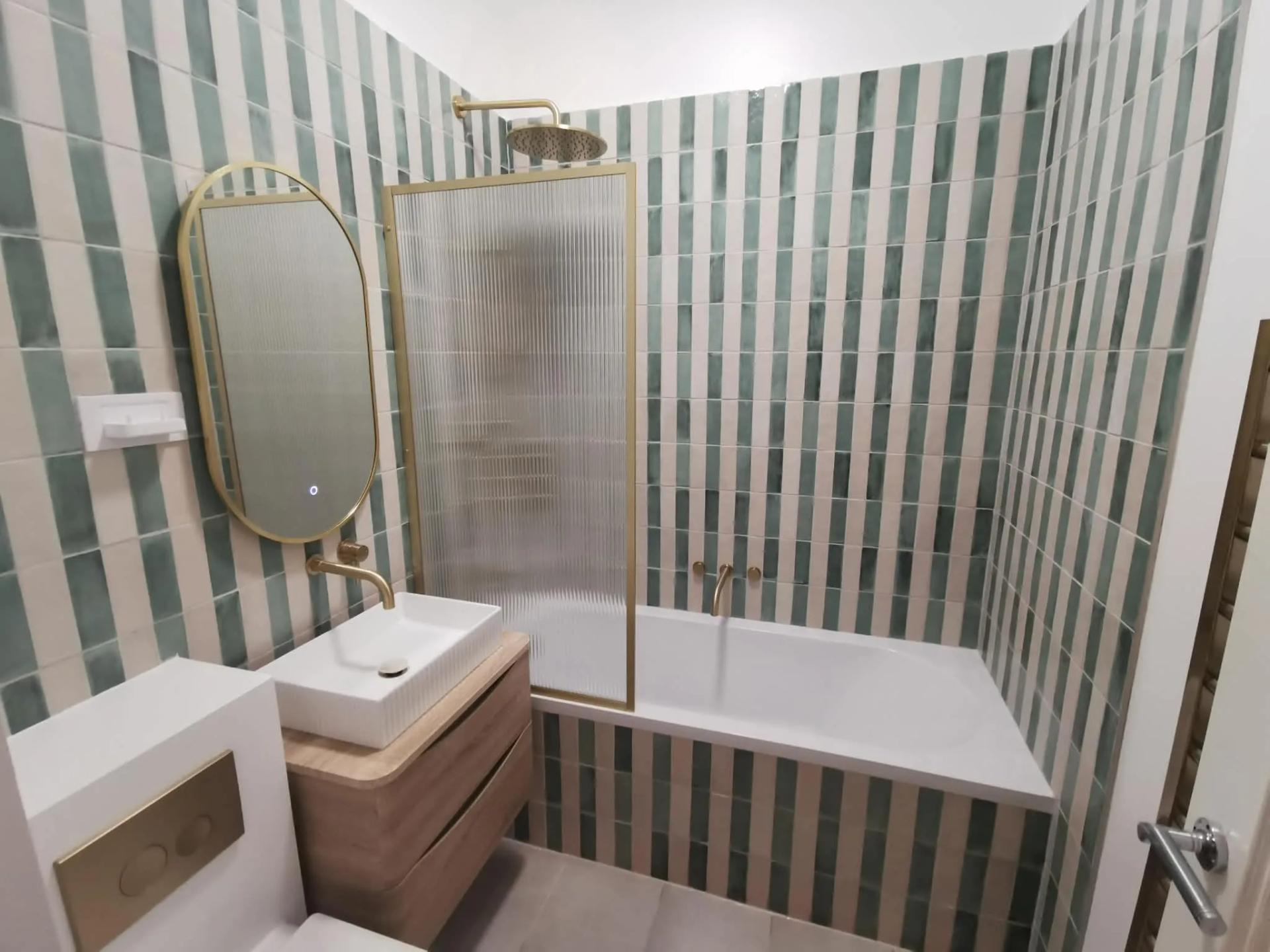
Use ceramic for: Bathroom walls above splash zones (where porcelain's extra cost isn't justified), decorative feature areas, and cloakroom walls. Ceramic also offers wider decorative options at lower price points.
Our Recommendation
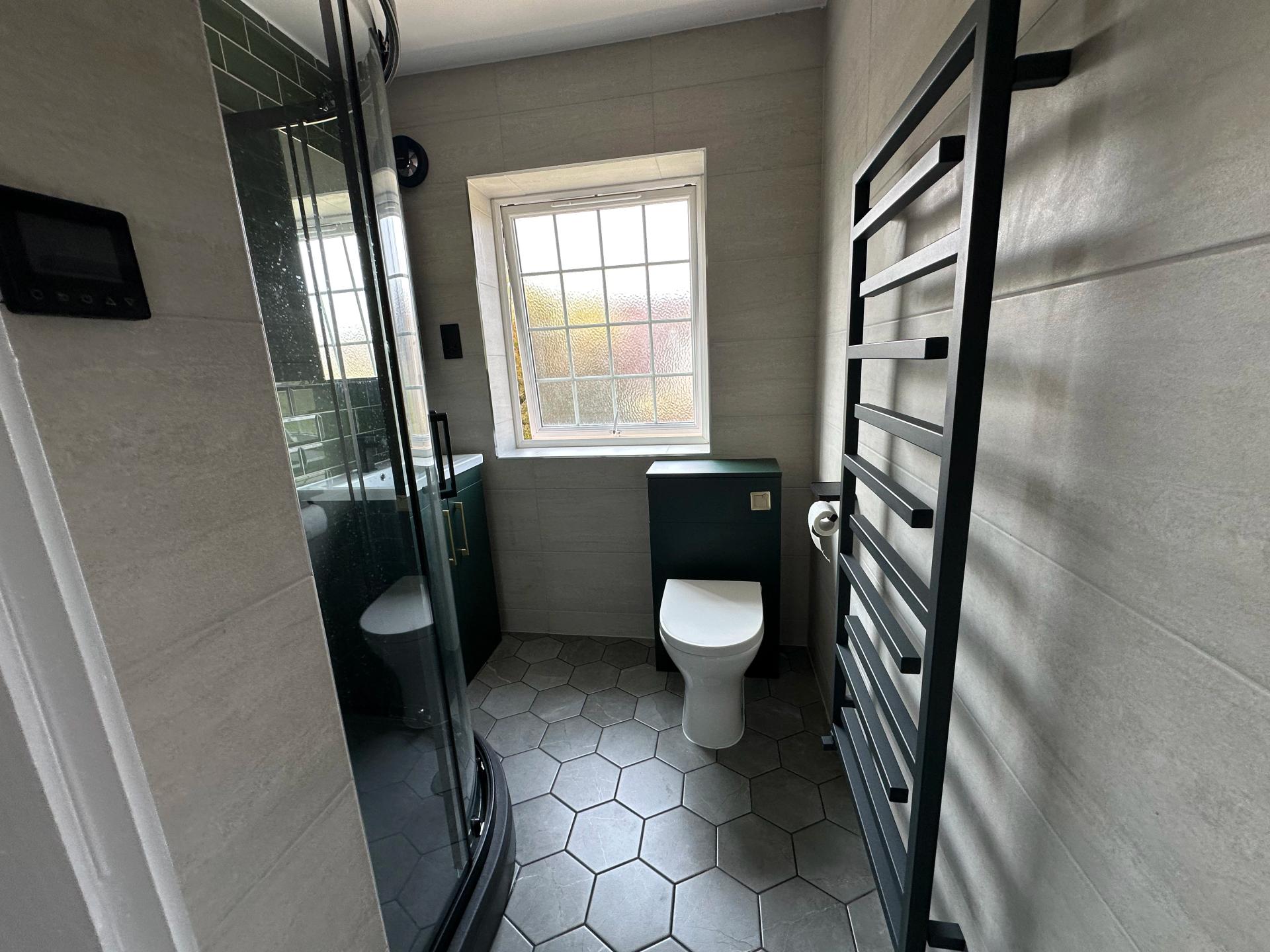
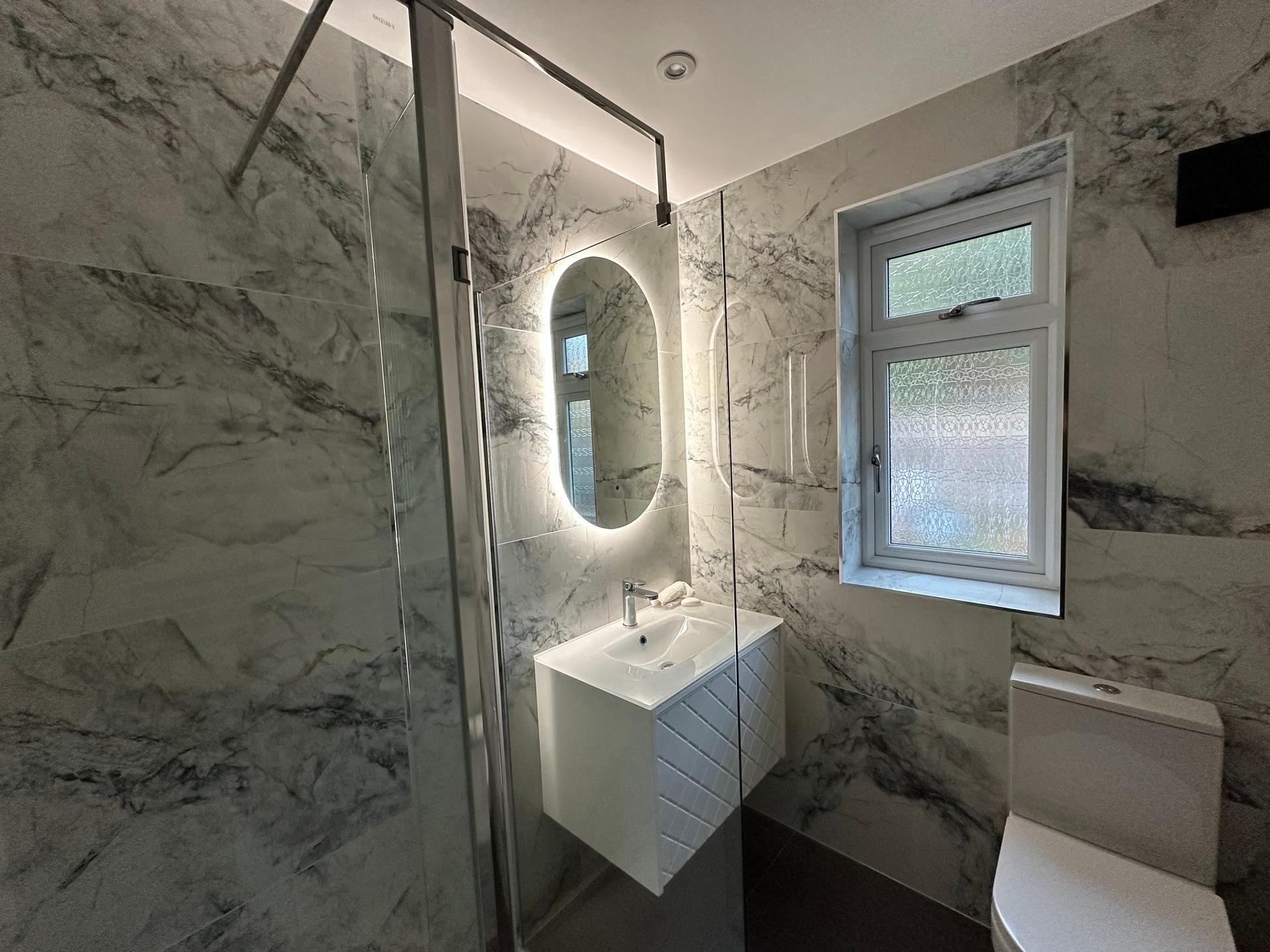
For a full bathroom renovation, we recommend porcelain throughout — floor and walls. The price difference is modest (often £5-15/m²), and the consistency of using one material type simplifies specification, reduces waste, and ensures the entire bathroom is waterproof.
Contact us and we'll help you choose the right tiles for your renovation.
Frequently Asked Questions
Are porcelain tiles harder to cut?
Yes. Porcelain requires a wet tile cutter with a diamond blade, while ceramic can often be cut with a manual tile cutter. This doesn't affect your renovation cost — your tiler will have the right tools.
Can I use ceramic tiles on a shower floor?
We wouldn't recommend it. Ceramic's higher water absorption can lead to moisture issues over time. Porcelain's near-zero absorption makes it the right choice for shower floors.
Do porcelain tiles need sealing?
Unglazed porcelain may benefit from sealing to prevent staining. Glazed porcelain generally doesn't need sealing. The grout lines do need sealing regardless of tile type.
2026 Update
Reviewed for 2026 with current material options in mind. Material performance and pricing vary, so confirm specifics before ordering. Ask us which materials suit your bathroom.