Natural Stone in Bathrooms: Marble, Travertine, and Slate Guide
Natural stone brings unmatched character to bathrooms. Our guide covers marble, travertine, limestone, and slate — their pros, cons, and maintenance needs.
Nothing matches the depth, character, and luxury of natural stone in a bathroom. Each slab is unique, with natural veining and colour variation that porcelain reproductions can approach but never quite replicate. However, natural stone requires more care and consideration than engineered alternatives.
Marble
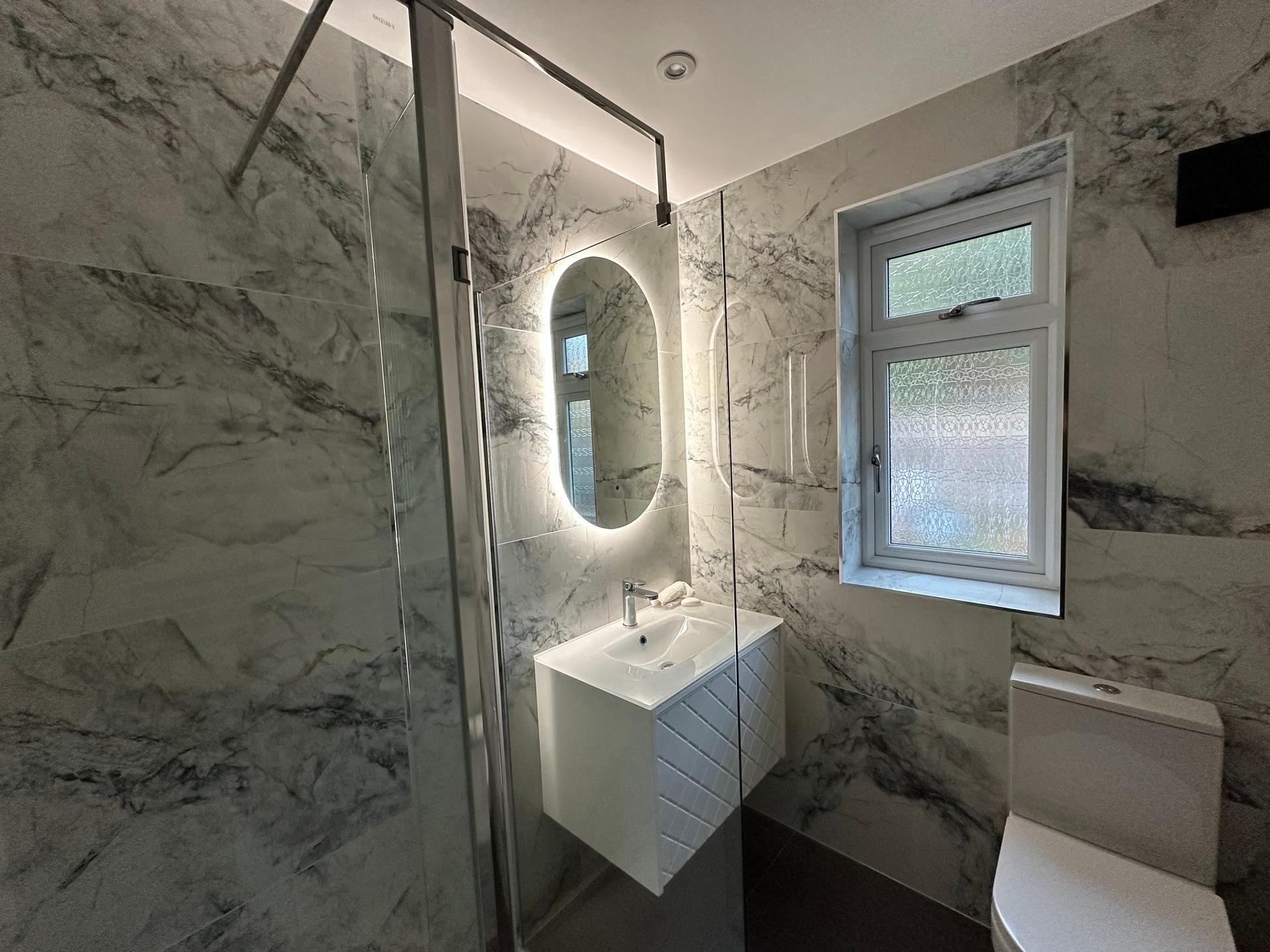
The most prestigious bathroom stone. Carrara (grey veining on white), Calacatta (bolder gold/grey veining on white), and Nero Marquina (white veining on black) are the most popular varieties for bathrooms.
- Pros: Stunning visual impact, each piece unique, adds significant property value, cool to touch (pleasant in warm months)
- Cons: Porous — requires sealing every 6-12 months. Etches with acidic substances (some cleaning products, lemon juice). Softer than granite or porcelain — can scratch. Expensive.
- Cost: £60 – £200/m² (tile) or £300 – £800/m² (slab)
- Best for: Feature walls, vanity countertops, and areas not exposed to heavy water or acidic products
Travertine
A limestone with distinctive natural holes and pits (which can be filled or left open). Available in warm cream, beige, and walnut tones. Common in Mediterranean-style bathrooms.
- Pros: Warm, organic appearance. More forgiving of imperfections than marble. Each piece has natural character. Anti-slip when honed.
- Cons: Porous — needs sealing. Softer than marble. Unfilled varieties trap dirt in the pits. Limited colour range.
- Cost: £40 – £100/m²
- Best for: Floors (honed and filled), feature walls, Mediterranean-style bathrooms
Slate
A metamorphic stone with a natural cleft texture. Available in dark grey, black, green, and rust tones. The riven (split) surface provides excellent natural grip.
- Pros: Naturally anti-slip, extremely durable, distinctive texture, good value compared to marble
- Cons: Limited colour range, can flake if poor quality, uneven surface can be harder to clean, not suitable for all design styles
- Cost: £30 – £80/m²
- Best for: Shower floors (natural grip), wet rooms, rustic and industrial-style bathrooms
Limestone
Similar to travertine but without the holes. Soft, warm tones in cream, beige, and grey. Popular for understated luxury.
- Pros: Warm, elegant appearance. Even texture. Works in both traditional and contemporary settings.
- Cons: Very porous — most demanding maintenance of all bathroom stones. Soft — scratches and etches easily. Expensive.
- Cost: £50 – £150/m²
- Best for: Vanity surfaces, wall panels, areas with minimal water exposure
Maintenance
All natural stone in bathrooms requires:
- Sealing: Apply an impregnating stone sealer before use and reapply every 6-12 months
- Cleaning: pH-neutral cleaners only — no vinegar, bleach, or acidic bathroom cleaners
- Drying: Wipe down after showering to prevent water stains and limescale buildup
- Professional cleaning: Annual professional stone cleaning and resealing for best results
Our Verdict
Natural stone is beautiful but high-maintenance. For clients who appreciate the aesthetic and are willing to maintain it, nothing else comes close. For a lower-maintenance alternative, premium marble-effect porcelain tiles from brands like Porcelanosa and Atlas Concorde are remarkably convincing.
Contact us to discuss natural stone or stone-effect options for your renovation.
Frequently Asked Questions
Can I use marble in a shower?
Yes, but it requires vigilant maintenance — regular sealing and drying after each use. For heavy-use family showers, porcelain marble-effect tiles are more practical.
Does natural stone increase property value?
Yes. Quality natural stone (especially marble) is universally recognised as a premium material and adds perceived value to a bathroom.
What's the best natural stone for hard water areas?
Slate or granite — they're denser and less porous than marble or limestone, so they handle London's hard water better. Marble and limestone show water marks more readily.
2026 Update
Reviewed for 2026 with current material options in mind. Material performance and pricing vary, so confirm specifics before ordering. Ask us which materials suit your bathroom.